Review
ZEISS Milvus 135mm f/2 Nikon F: a portrait telephoto for manual focus
The manual 135 mm ZEISS Milvus for portraits, details and products: who manual focus suits, how to work at f/2 and what to check on a used copy.
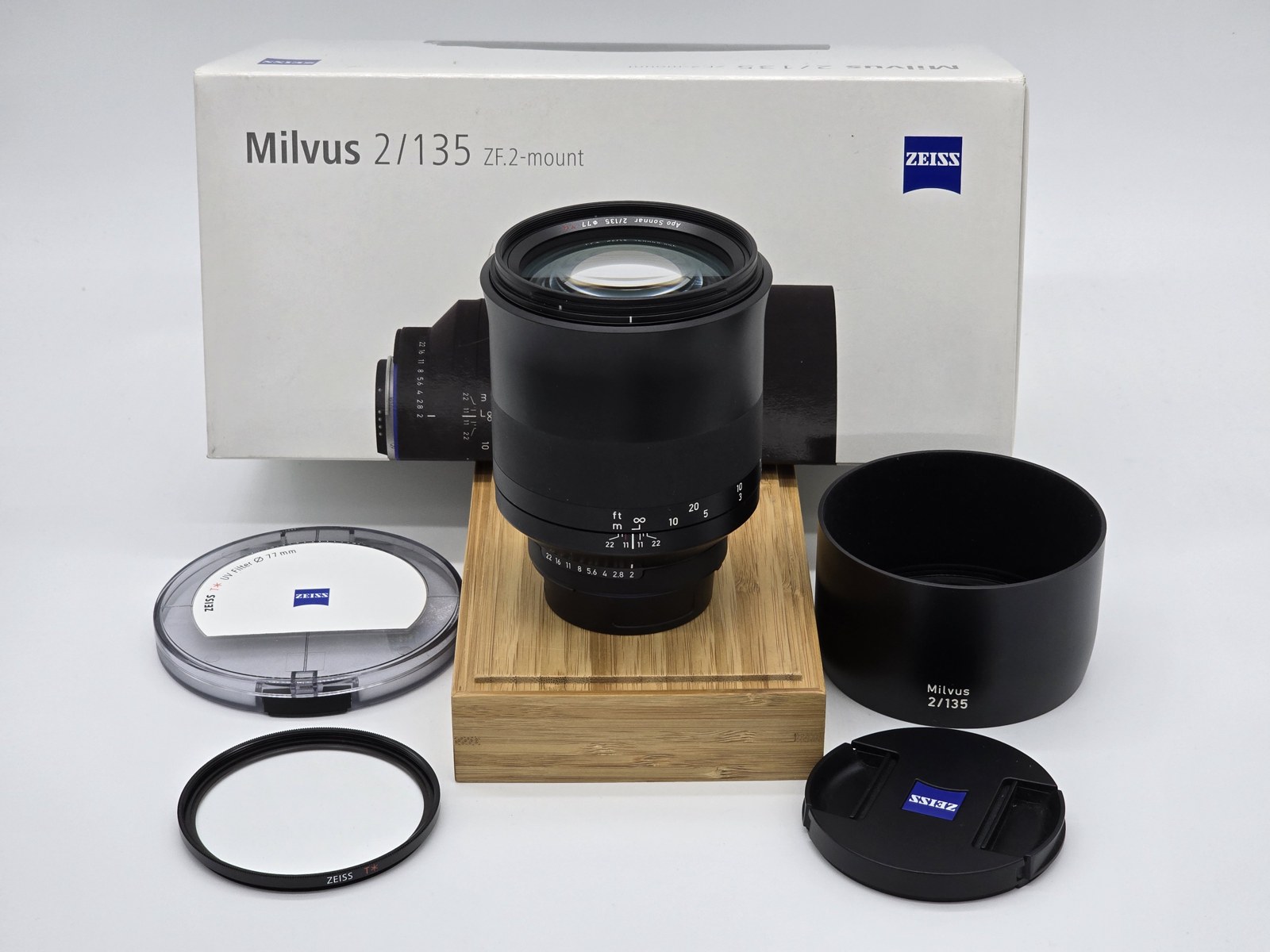
The ZEISS Milvus 135 mm f/2 ZF.2 is a manual telephoto lens for the Nikon F mount, for photographers willing to give focusing time and attention. It offers f/2 speed, an all-metal build and the rendering that people buy a Milvus for. It does not bring speed of work, but control over where the viewer looks. This article says who it suits, how to work with it, and what to check on a used copy.
Who 135 mm is for
A 135 mm focal length gives you distance from the subject. For a waist-up portrait you stand roughly 4–5 metres from the person, so the perspective is calm and the background is compressed closer to the subject. It suits portraits, details, animals and product shots. I recommend it where you have room: in a small flat or indoors, 135 mm is often too long.
The f/2 aperture allows strong separation of the subject from the background. There is a flip side: at 3 m the depth of field is only about 6 cm, at 2 m about 2.5 cm. For fast-moving children, sport or spontaneous reportage manual focus is limiting. For posed portraits, work from a tripod or product shots it is an advantage.
Rendering and sharpness in practice
The optics belong to the Apo Sonnar family, which means emphasis on correcting colour fringing. In a portrait this means cleaner contours without colour edges along light and dark boundaries. The transition to blur is smooth and the background is not nervous. These are exactly the lenses people buy for portraits and details.
At f/2 the depth of field is small and a focus error shows immediately. In a portrait the eye closer to you may be sharp while the farther one is already outside the plane of focus. My recommendations:
- For maximum reliability stop down to f/2.8 or f/4.
- Focus through live view with magnification on the eye (on a Z body through the FTZ adapter with focus peaking).
- Minimum hand-held time: 1/250 s without in-body stabilization, 1/125 s with it. With a high-resolution sensor rather 1/500 s.
- When working from a tripod, switch stabilization off if the body has it.
The focus ring has a long throw, which allows fine adjustments, but refocusing from near to far takes more hand movement. The minimum focus distance is around 0.8 m.
Focusing without autofocus
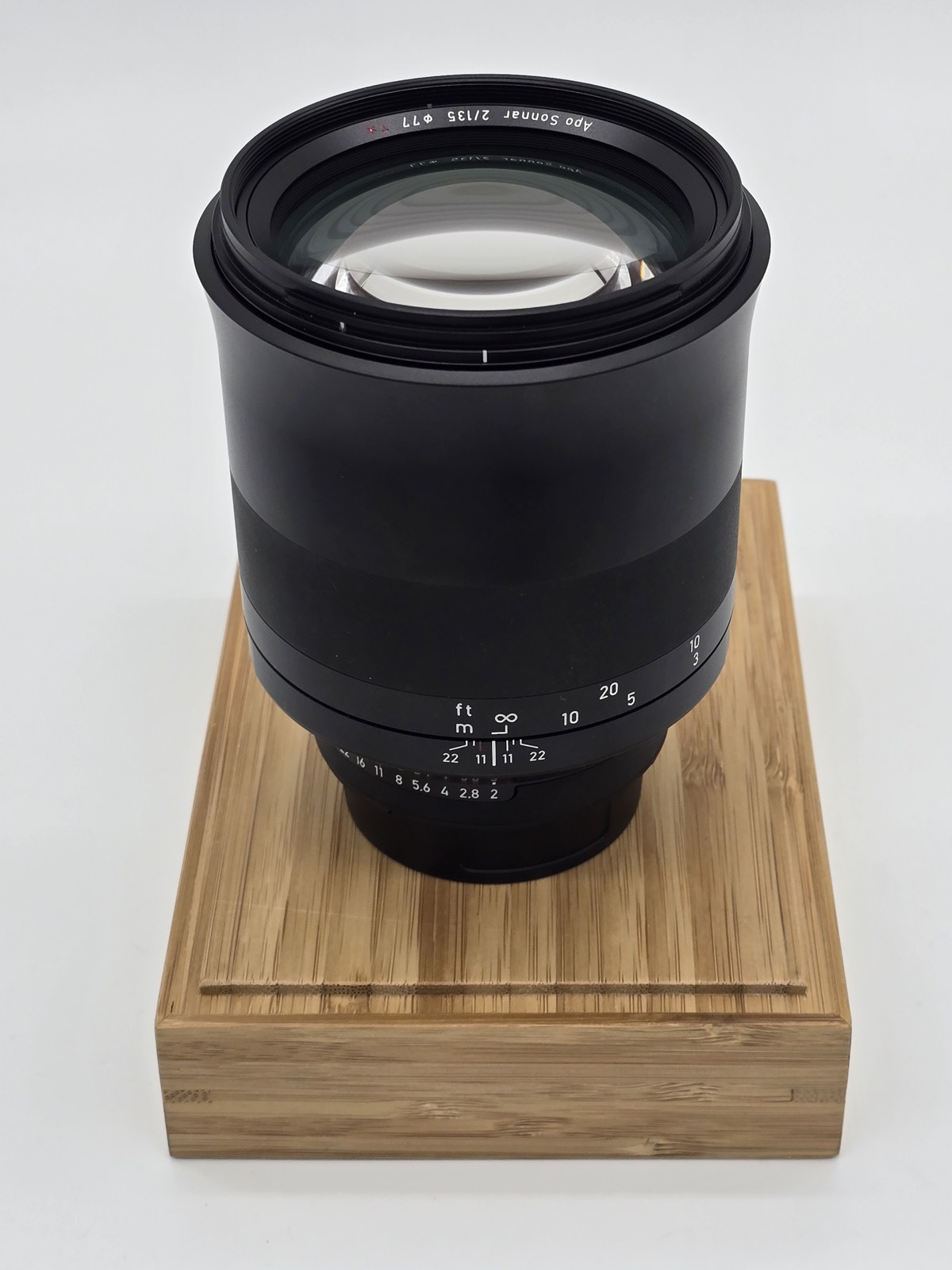
The lens has no autofocus and no stabilization. On Nikon DSLRs the focus indicator in the viewfinder helps; on mirrorless bodies magnified live view and edge highlighting are better. The lens does have an aperture ring, so you set the aperture directly on it.
Beware of the small screen: a frame that looks sharp there may have the eye outside the plane of focus. At f/2 therefore use the magnified view regularly and check the result on a zoomed-in frame.
What to compare it with
Fixed portrait lenses with a shorter focal length are easier to use in small spaces and let you be closer to the model. The Milvus 135 mm gives more distance and a different relationship with the background. If you need autofocus, look at the Sony FE 135 mm f/1.8 GM or a portrait 85 mm, see the Sony FE 85 mm f/1.4 GM. A telezoom offers more flexibility when changing composition, but it will not be as fast or as clean in rendering.
What to check when buying used
- The focus ring must move smoothly, without catching and without uneven play.
- Shine a torch through the front and rear elements: dust, haze, fungus or scratches. See How to check a used lens and Fungus in a lens.
- Check that focus reaches infinity just beyond the infinity mark; test on a distant subject from a tripod with magnification.
- Check the aperture ring, the mount and the contacts. The aperture must click into every position.
- Mount it on a body and shoot a series at f/2 focusing on the eye; compare sharpness in the centre and in the corners.
- Lens hood and caps: a lens with its complete kit is easier to resell.
What I currently have on offer you can see in the cards.
What I would do
If you shoot posed portraits, details or products and enjoy focusing by hand, the Milvus 135 mm f/2 is one of the best lenses you can use on Nikon F. If you shoot children or sport, I would take an autofocus telephoto and not regret the lost speed. More tips are in Portrait: what to shoot with and Product photography, and lenses are in the shop.