Buying advice
Indoor sports: fast autofocus and light in dim halls
Indoor sport demands short shutter speeds, high ISO and reliable autofocus. Which body and lens to choose, how to set the camera and what to check on a used unit.
Indoor sport is the hardest genre for many photographers. Players move fast, there is little light, and the hall often lights in a way that makes frames flicker or shift colour. The good news is that today's mirrorless cameras handle this far better than DSLRs did ten years ago. The bad news is that success does not depend on one thing: the body, the lens and your settings all have to work together.
What to expect from indoor sport
To freeze movement you need roughly 1/500 s, and for fast sports such as floorball, handball or basketball more like 1/800 to 1/1000 s. At that speed in an ordinary hall ISO climbs to 3200–12800 even with an f/2.8 lens. That is normal and nothing to be afraid of: a sharp, noisy frame is better than a blurred, clean one. Noise can be reduced, blur cannot.
That is why a body with good high-ISO behaviour pays off for indoor sport. On full-frame bodies with 24–33 MP the noise is handled well, and a higher ISO is still usable in an ordinary hall. You do not have to chase megapixels either: 24 MP is enough for sport.
The body: what to look at
- Tracking. The body must keep focus on a player who quickly approaches and moves away again. Older bodies and cheaper APS-C models often fail here. Newer mirrorless cameras track people and faces.
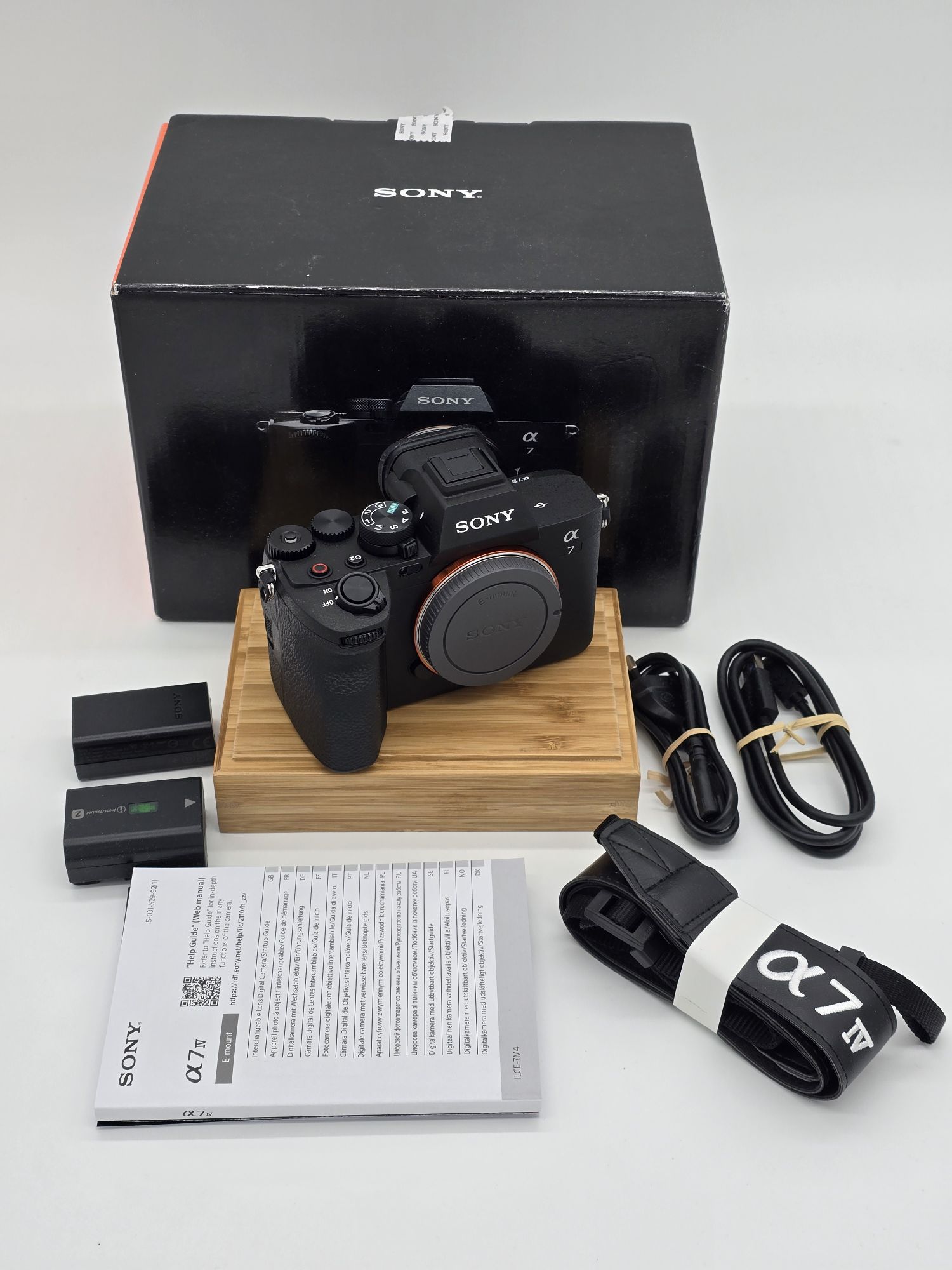
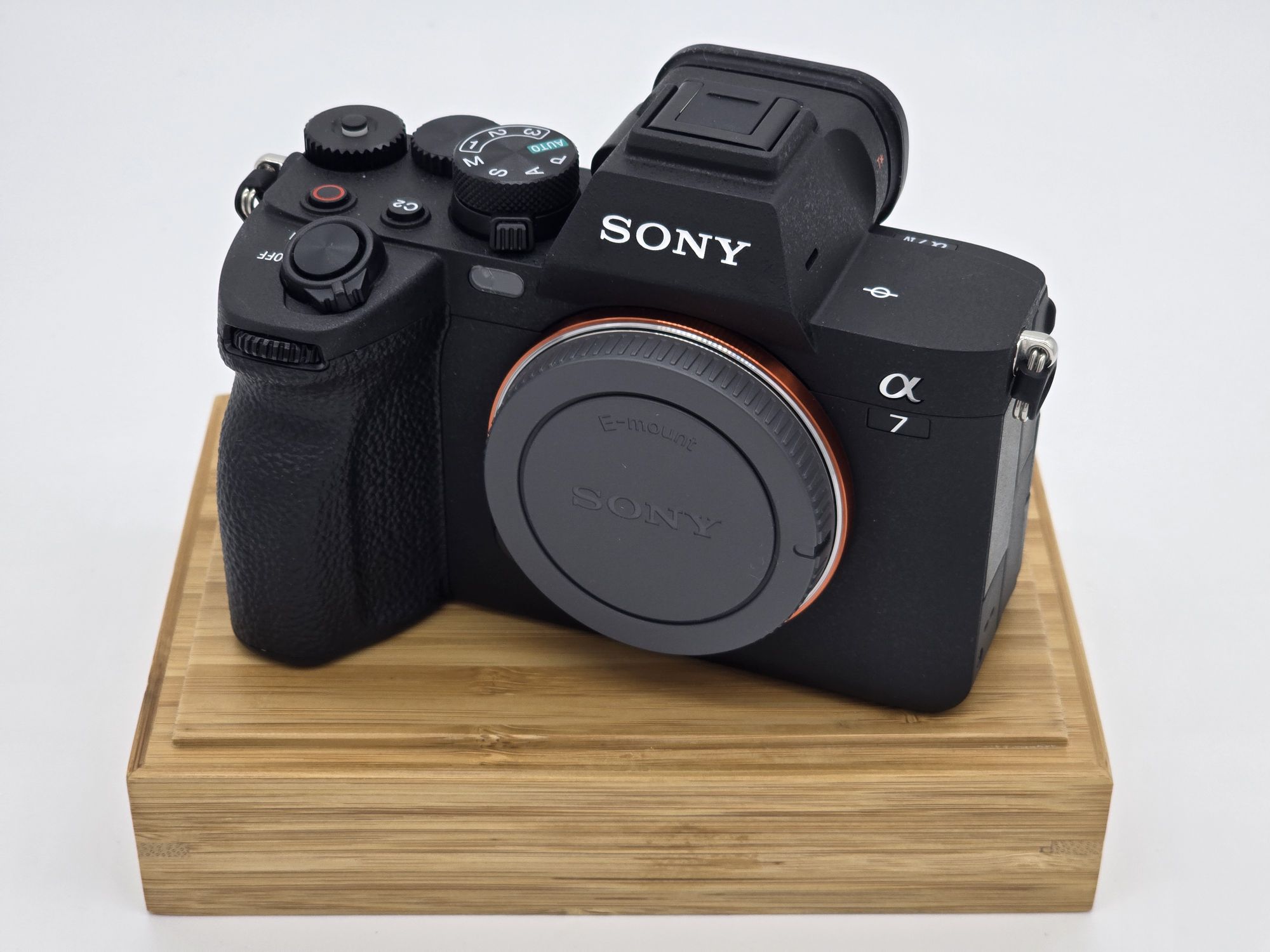
- Burst with continuous AF. The mechanical shutter of the Sony A7 IV manages up to 10 frames per second, the Nikon Z6 II up to 14, and the Canon R6 Mark II and R8 reach up to 40 with the electronic shutter. For sport 8–12 frames per second is enough; the point is that the body keeps focusing during the burst.
- Two card slots. For a job you cannot repeat, backing up to a second card is worth having. The A7 IV and Z6 II have two slots, the R8 and A7C only one.
- Flicker reduction. Hall lights (discharge lamps, LEDs) flicker, and frames then vary in brightness or colour. The Sony A7 IV has a shooting mode with flicker reduction; on other bodies check whether they offer one.
Be careful with the electronic shutter: on the Sony A7 IV the sensor readout is slow, so fast movement and artificial light can distort the image. In a hall stay on the mechanical shutter unless the body has a fast stacked sensor.
The lens: speed and focal length
For halls a fast telezoom works best, above all a 70–200 mm f/2.8, or fast 85 and 135 mm primes. You stand at the court or in the stands, so a 70–200 mm covers most situations from the basket to the audience. Primes of 35 and 50 mm are usually too wide for indoor sport and only suit atmosphere shots and spectators, or when you stand right at the line.
An aperture of f/2.8 is a sensible minimum. An f/4 lens forces ISO above 12800 or a slower shutter in an ordinary hall, and both show in the frames. For sport you do not need to go to f/1.4, mainly because of depth of field: at f/1.4 on 85 mm only a small part of the player is sharp, and when tracking slips for a moment the frame is missed.
How to set the camera
Manual mode with auto ISO, or shutter priority. Shutter 1/800 s, aperture f/2.8 and ISO on auto with an upper limit around 12800. Set focus to continuous with tracking and person recognition. Use a medium-sized focus area rather than a single point that the player escapes. Set white balance by hand or choose a value around 3800–4500 K depending on the hall, and shoot RAW so that you can correct colour later.
What to check on a used unit
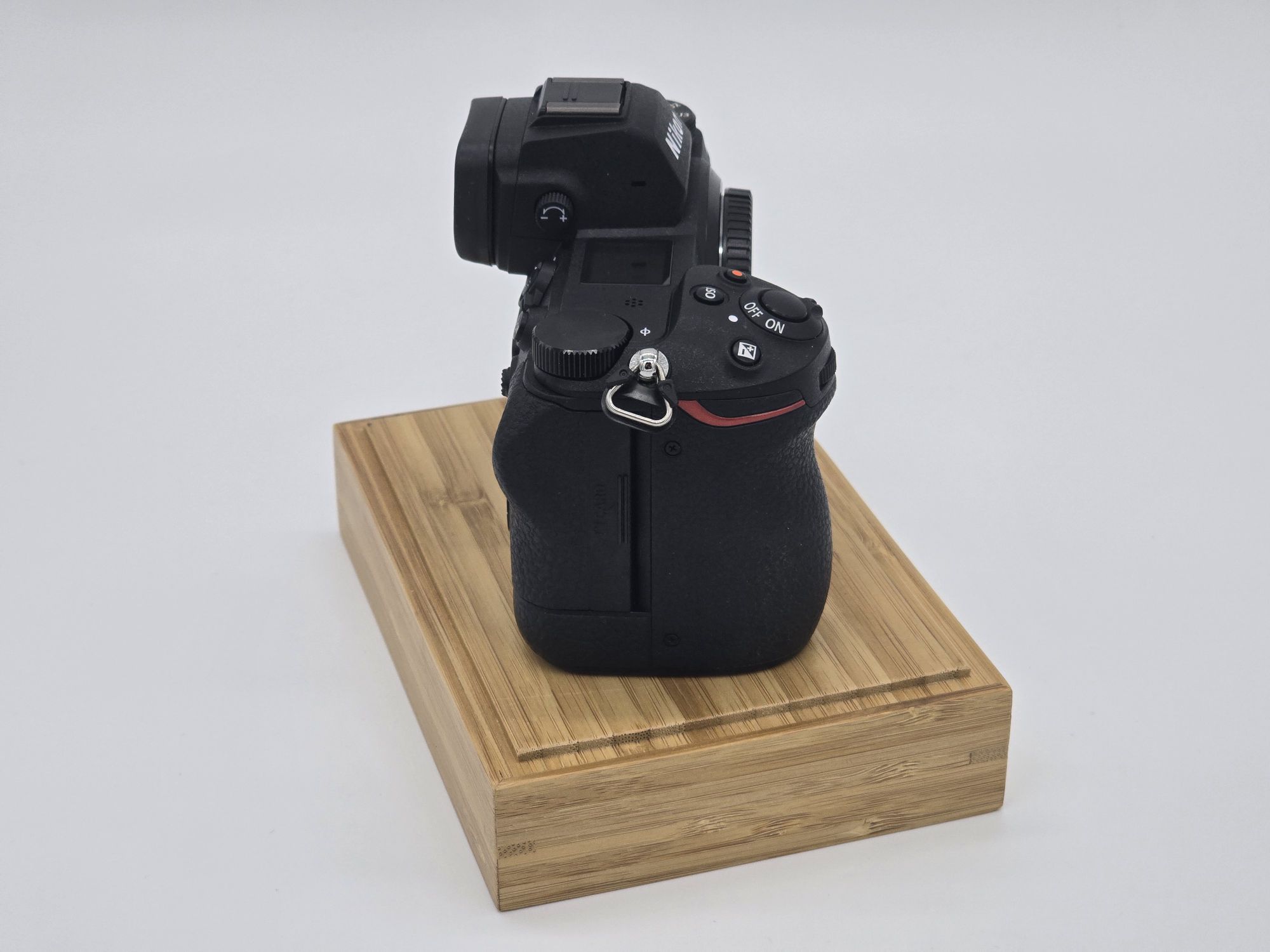
On the body, test continuous autofocus with a moving subject, for example a friend walking across the room towards you. Run the burst at full speed and check that no frames drop and that the buffer clears to the card in a reasonable time. On a telezoom check stabilisation, the zoom action, play in the mount and whether it focuses equally fast across the whole range. The general procedure is in the article How to check a used camera before buying.
What I would do
For indoor sport I would take a full-frame body with good tracking and two slots and put a 70–200 mm f/2.8 telezoom on it, even though it is the biggest expense. The difference between a good and a poor sports frame comes from autofocus and shutter speed, not megapixels. If you cannot afford the telezoom yet, start with an 85 or 135 mm f/1.8 prime and learn to work with distance.
What I currently offer you will see in the cards. A comparison of two popular bodies is in the article Nikon Z6 II vs Sony A7III, more gear in the shop.