
Review
Sony FE 50 mm f/1.4 GM: is it the right fifty?
Sony FE 50 mm f/1.4 GM versus the cheap f/1.8: the real difference, who should pay extra, and what to check on a used copy.
The Sony FE 50 mm f/1.4 GM is one of the most respected standard lenses for the E mount. The 50 mm focal length shows up in portraits, reportage and everyday shooting, so it pays to know what exactly you are paying for with the GM. I compare it with the cheap Sony FE 50 mm f/1.8 and add what matters to anyone considering a used copy: who it suits and what to check at pickup.
What differs from the f/1.8
It is not just the price. The Sony FE 50 mm f/1.8 is small and light (around 190 g) with a 49 mm filter thread. It is a sensible choice for beginners and as a backup lens, but wide open it renders less impressively, especially in the corners and along contrasty edges.
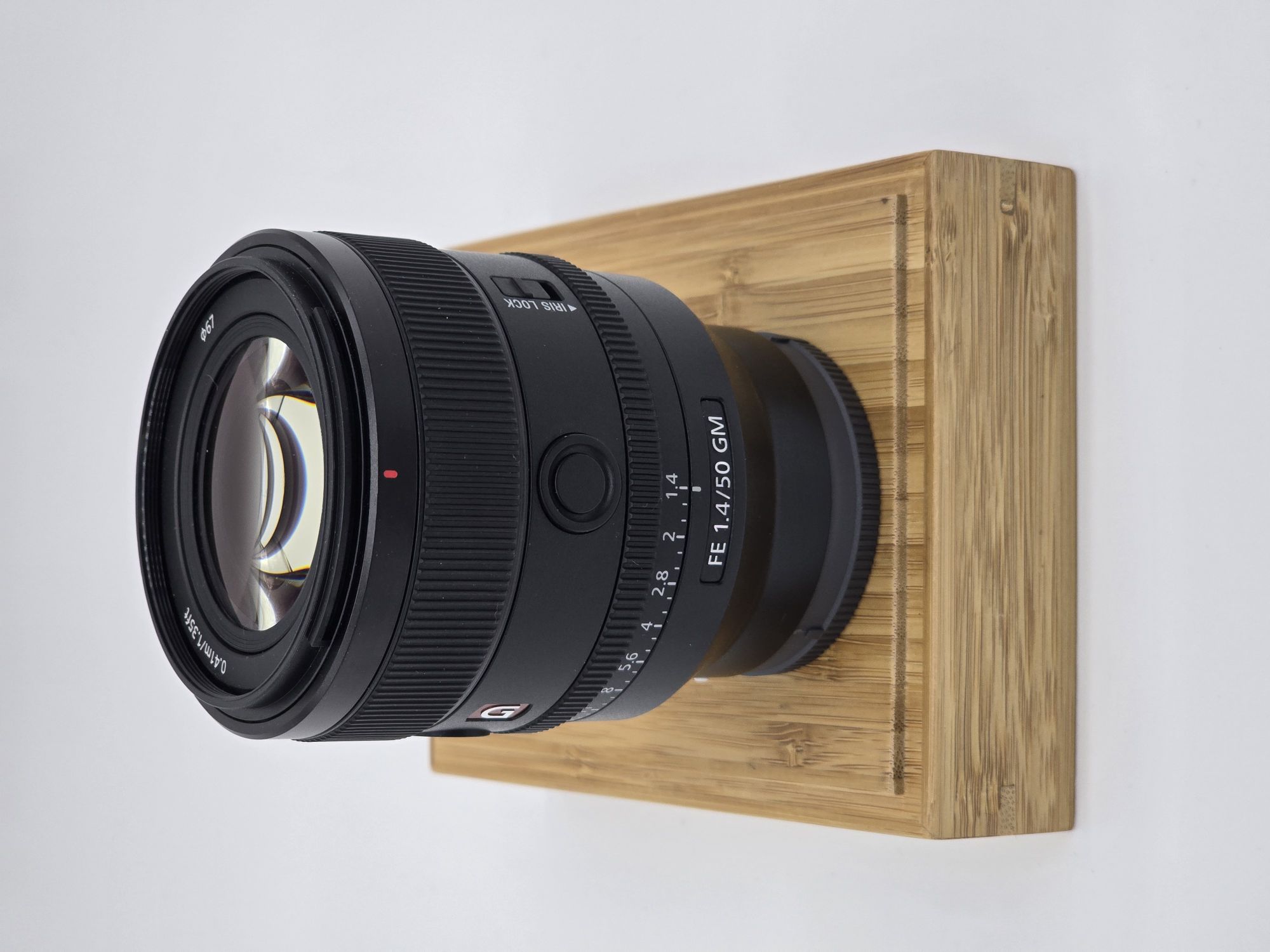
The GM is a different class: roughly 520 g, a 67 mm filter and a brighter aperture. The difference between f/1.4 and f/1.8 is about 2/3 EV, meaning a shorter shutter time or lower ISO in the same light. More important is that you can actually use f/1.4 on the GM, since the manufacturer aims for good sharpness from the open aperture, while the f/1.8 is better stopped down.
Optics and bokeh
GM (G Master) marks Sony's top lens line. On this 50 mm it shows mostly as a clean image around highlights: colour fringing along contrasty edges is suppressed and out-of-focus areas look calm. You notice it in a portrait with a window or bright sky behind the subject.
If you shoot for social media and downsize, you will rarely see a difference from the f/1.8. The GM pays off when you view images at high resolution, print large, or need f/1.4 to f/2 as your normal aperture. Expect vignetting at f/1.4, as with all fast 50s; it can be corrected in editing or reduced by stopping down.
Autofocus and handling
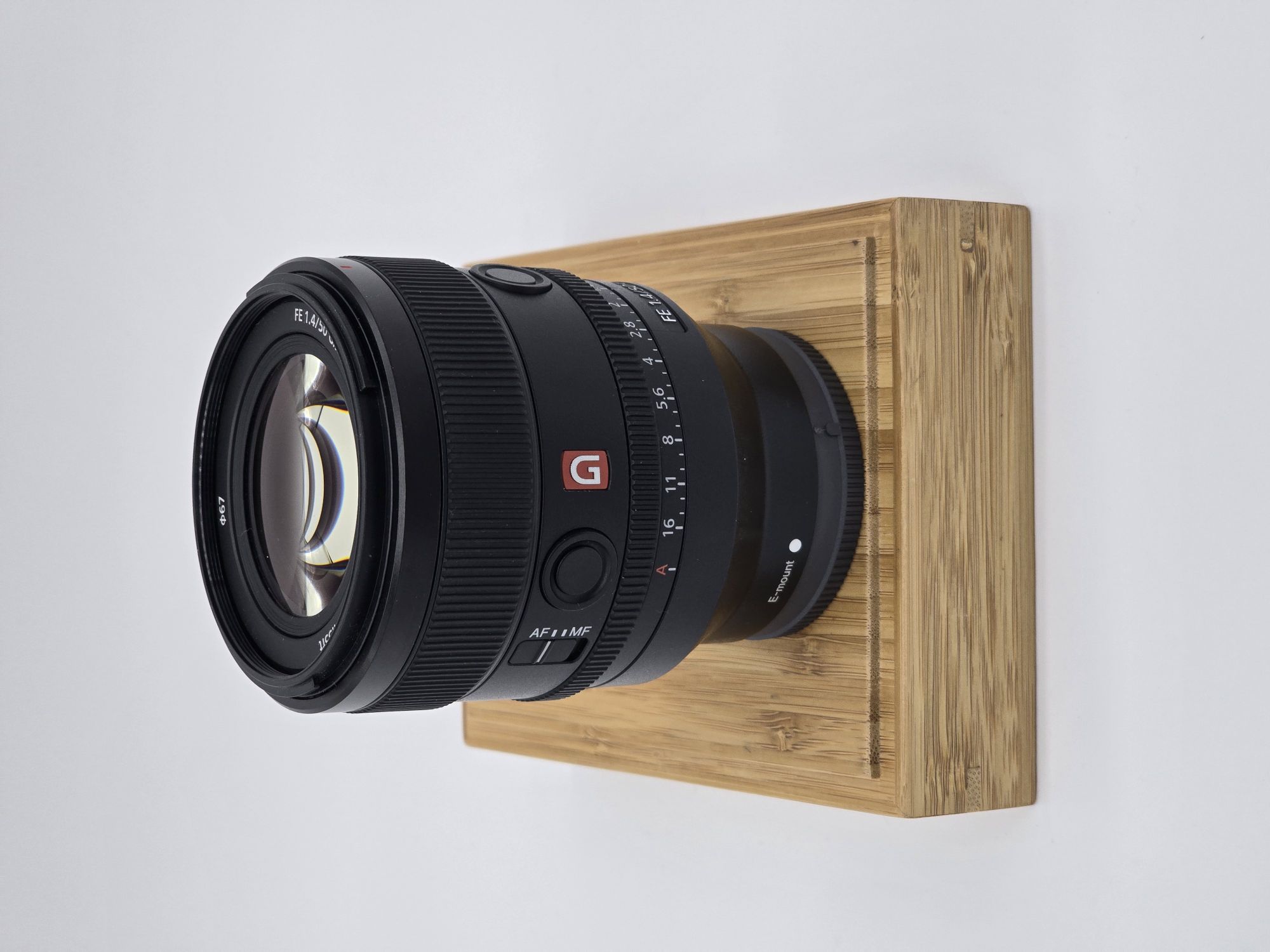
The GM focuses with linear motors, so it is fast, quiet and good for video. The body has an AF/MF switch, a focus hold button and an aperture ring with a switch to turn off the clicks, which is welcome when filming. The f/1.8 has none of that and focuses more slowly, particularly when tracking movement.
The GM is also sealed against dust and moisture, but sealed does not mean waterproof. Take it out in the rain, then wipe it down and do not leave it damp in the bag.
What to check on a used copy
On a used GM the usual issues are cosmetic rather than optical, but go through these points:
- front and rear element: small dust specks do not matter, scratches and worn coating do,
- inside, with a flashlight: haze, fungus or threads should not be there,
- the aperture ring and the click switch must move smoothly and without play,
- try the AF/MF switch, the focus hold button and the focus ring through the whole range,
- a photo of a flat wall at f/1.4: both sides must be equally sharp, otherwise the lens is decentered,
- the mount must have no play and the contacts must be clean.
What to pay for a used copy changes with the market. Roughly, the GM costs several times as much as the f/1.8 on the used market, and that has to be weighed against how often you will really use it.
Practical settings
For portraits use f/1.4 to f/2 at 1/250 s or faster for moving people and 1/125 s for people standing still, ISO 100 to 400 outdoors. At f/1.4 the depth of field at half a metre is only about one centimetre, so use eye detection on the body and focus on the nearer eye. For reportage and street, f/2.8 to f/4 gives the safest results.
Who it is for and who it is not
Yes: portrait and wedding photographers who will use f/1.4 regularly, and anyone filming who needs quiet AF and an aperture ring. No: those who keep a 50 mm in the bag just in case. For them the f/1.8 is enough, or consider another fast prime such as the Sony FE 35 mm f/1.8 vs. 35 mm f/1.4 GM or the 85 mm f/1.4 GM. Also worth a mention are the Sigma 50 mm f/1.4 DG DN Art and the pricier Sony 50 mm f/1.2 GM, which is noticeably heavier.
What I would do
If you do portraits and want one light without compromise, I take the GM. If I need light kit for travel, I stay with the f/1.8 and save money for another lens. More about choosing is in the article Which lens for portraits. You will find the current used lenses in the e-shop; what I have available right now appears in the card below.