Review
Sony FE 200–600 mm G OSS: an affordable super-telephoto for wildlife
The Sony FE 200–600 mm f/5.6–6.3 G OSS as a used super-telephoto for birds and animals: who it suits, what shutter speeds and ISO to expect, what to check when buying and the alternatives.
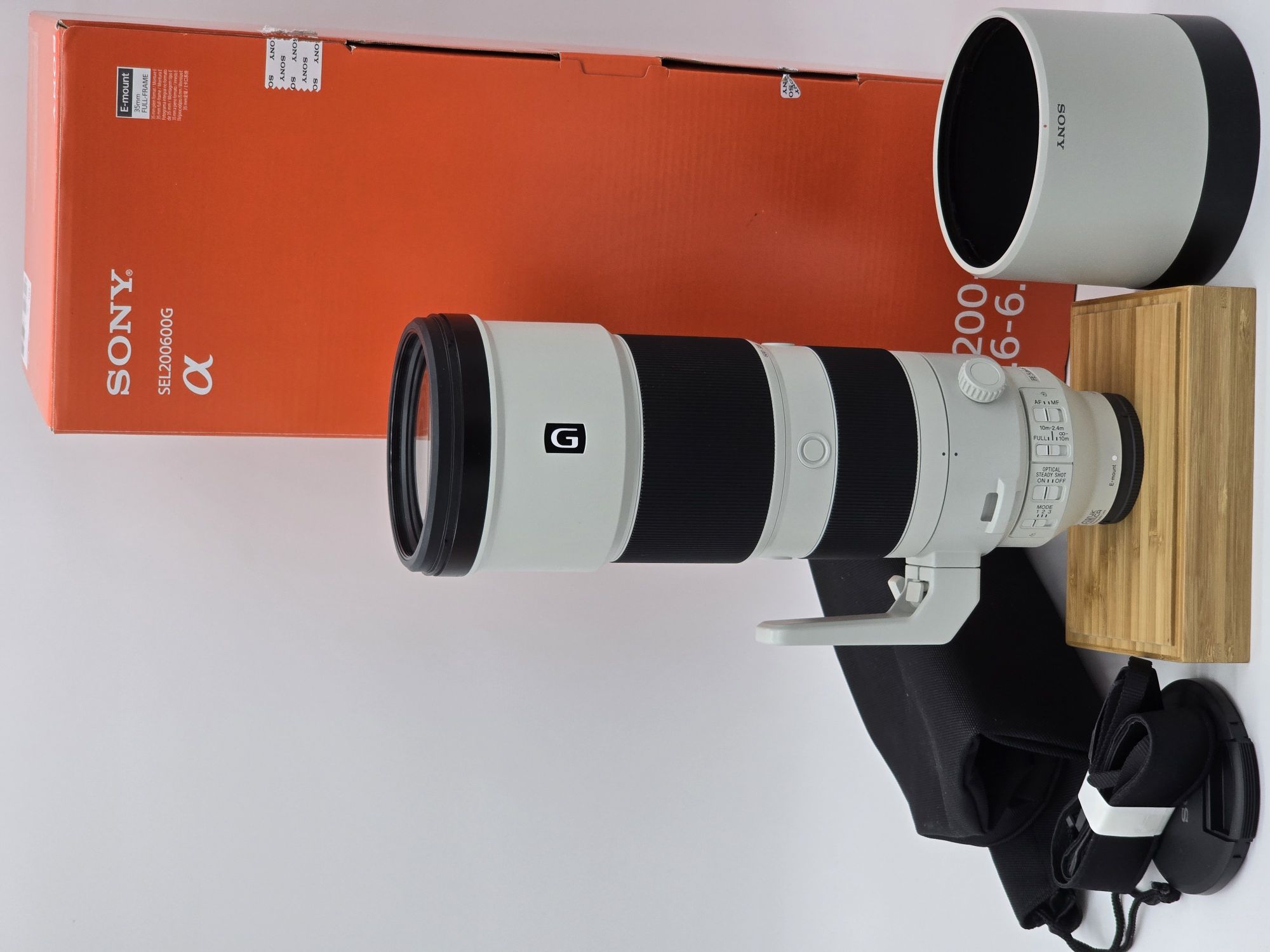
If you want to photograph birds and wildlife from a distance the animals will tolerate, you sooner or later end up at 600 mm. The Sony FE 200–600 mm f/5.6–6.3 G OSS has been the most common choice since its release for Sony E-mount owners who do not want to pay for a fixed-focal-length f/4 super-telephoto. It is neither light nor discreet, but on the used market it is one of the most sensible ways to get to 600 mm. Here is what to expect, what to watch for and when to choose something else.
Who it is for and who it is not
The lens is for photographers who shoot wildlife, birds, distant sports or aircraft and need reach more than speed. A 200–600 mm zoom on full frame lets you frame a whole deer in a forest clearing as well as the head of a bird on a branch. On APS-C bodies the equivalent is roughly 300–900 mm, which makes a real difference with small birds.
I would not recommend it for multi-day treks with minimal gear. It weighs around 2.1 kg, and without a tripod, monopod or a tree to lean on, you can shoot handheld only for a short time. For travel, where you want one universal lens, a lighter zoom is far more sensible, for example from the article on a travel lens.
Reach and build
600 mm captures even smaller birds at a distance where they are not yet scared. The zoom is internal, so the lens does not extend when you change focal length and the weight does not shift forward. You appreciate that when you zoom quickly from 200 to 600 mm because an animal turns up closer than expected. The construction is dust and moisture resistant, which helps in the field, but in rain you still need to cover the lens.
The lens works with Sony 1.4× and 2× teleconverters. With the 1.4× you get 840 mm, but the aperture drops by about a stop and focusing is slower and less certain. It is usable in good light on slower subjects; I would not count on it for birds in flight.
OSS stabilization and exposure
At 600 mm, optical stabilization in the lens is a must. Together with in-body stabilization it lets you shoot handheld at slower speeds than you might expect, but keep two things in mind. First, stabilization helps against your own shake, not against subject movement. For live subjects you need 1/1000 s or faster, and for birds in flight more like 1/1600–1/2500 s.
Second, f/6.3 at the long end means you quickly reach high ISO in a forest or at dusk. On an overcast day, ISO 3200–6400 at 1/1250 s is common. That is why a body with good high-ISO behaviour and denoising software is useful. A tripod or monopod, using the foot supplied with the lens, is almost a necessity for longer observation.
Autofocus on birds and animals
Focusing is fast and quiet, and with modern Sony bodies (for example the A7 IV or A1) it tracks well and recognises animal and bird eyes. Older bodies such as the A7 III offer fewer recognition options, so expect to do more manual zone selection. The lens has a focus range limiter, which is worth using: when you shoot distant birds it shortens the hunt and reduces pumping.
What you cannot avoid is a minimum focusing distance of around 2.4 m. The lens is not for macro or close subjects, even though it works well at a hide with tame birds.
What to check on a used copy
A super-telephoto travels in a backpack and sometimes falls on a tripod, so do not rely only on photos in the listing. What to check before buying:
- Tripod foot and rings: the foot must hold firmly without play, and the zoom ring should turn smoothly without catching.
- Front element and interior: look against the light for dust, fingerprints and faint hazy marks that could be the start of fungus. More in the article on checking a used lens.
- Stabilization: with the body on, the image in the viewfinder should stay calm, without clicking or whirring. With OSS off, nothing should rattle when you tap the lens.
- Autofocus across the range: test focusing at 200, 400 and 600 mm on a detailed subject tens of metres away and compare sharpness across the frame.
- Lens hood and case: on a big lens they get lost easily, yet they protect the glass well.
Alternatives
If 2.1 kg or the price does not suit you, there are two reasonable routes. The Sigma 150–600 mm Sports DG DN OS has a wider range but weighs about the same. The Tamron 150–500 mm f/5–6.7 Di III VC VXD is noticeably lighter but stops at 500 mm. For Sony users who need a more universal telezoom, the Sony FE 70–200 mm is also interesting; see the comparison Sony 70–200 mm GM vs G. How to start with birds on a smaller budget is also covered in wildlife and birds.
What I would do
I see the Sony FE 200–600 mm as the first super-telephoto for a Sony E-mount owner who wants to get seriously into wildlife and does not want to spend more than twice as much on lenses. I would buy it with a modern body with bird recognition and use it with a tripod or monopod. If I mainly shot handheld and travelled, I would choose a lighter 150–500 mm or a smaller telezoom and leave long lenses for later.
What I currently have on offer you will see in the cards below the article, or browse the shop.