
Review
Sony FE 16–35 mm f/2.8 GM: a top wide zoom for landscape and architecture
A Sony GM wide zoom for landscape, architecture and video. How to set it up, common mistakes, how it compares with the Tamron 17–28 mm and what to check on a used copy.
When people talk about professional gear for Sony E, the G Master line commands respect. The Sony FE 16–35 mm f/2.8 GM is not just another wide zoom; for a long time it was the benchmark others were compared with. For landscape, architecture and video it is the standard choice. On the used market it costs a fraction of the new price, and it is worth knowing where to look on a given copy.
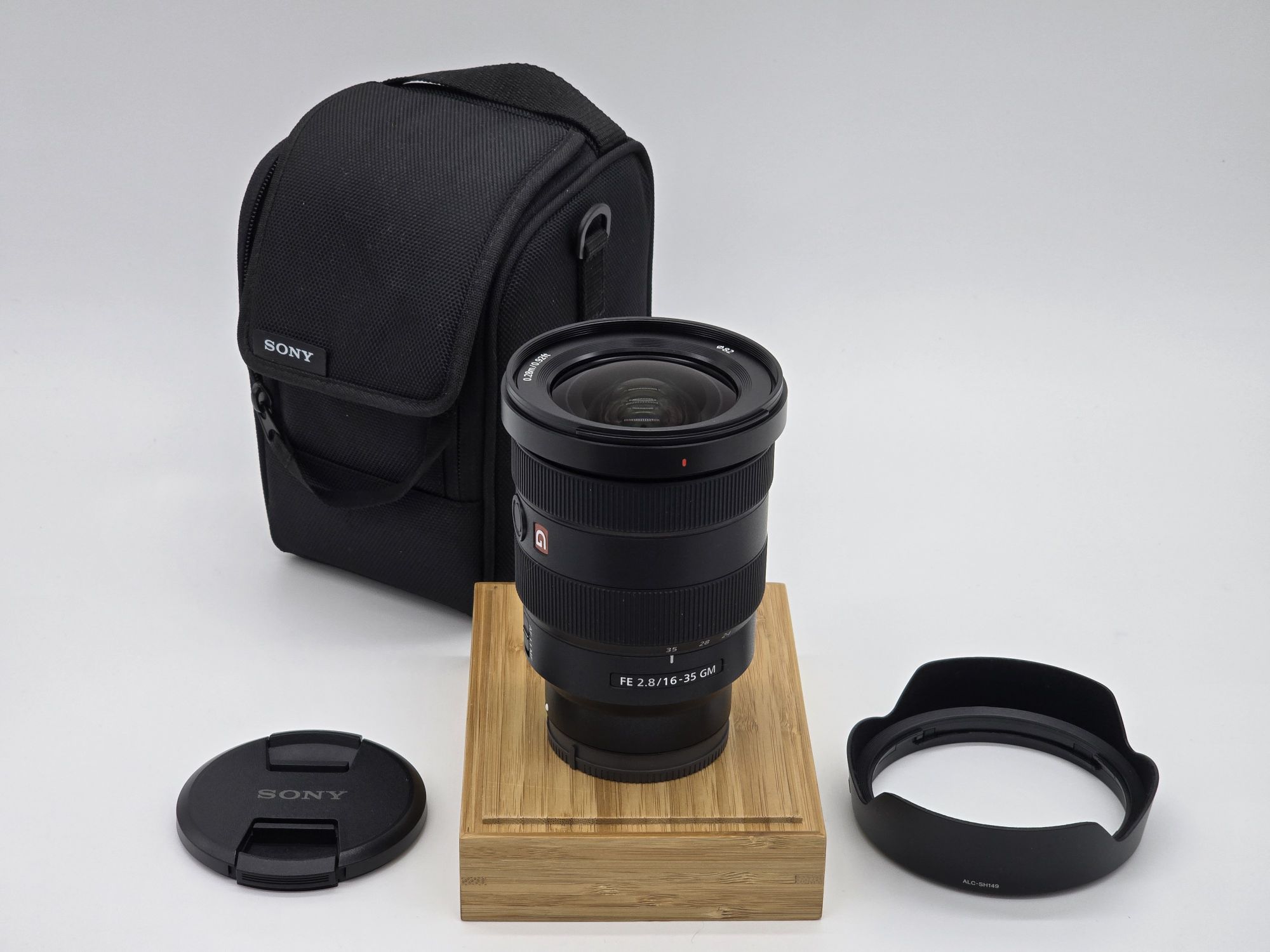
What I currently offer is in the card above. Below you will find who the lens is for, how to set it up and what can replace it.
Why exactly 16–35 mm
The 16–35 mm range on full frame is a golden middle between an extreme angle and a natural view.
- 16 mm gives a dramatic perspective for tight interiors and wild landscape.
- 35 mm suits reportage, landscape details or a portrait with the surroundings.
Thanks to its versatility it often stays on the body longer than any other lens. Travellers and field photographers will appreciate that one piece replaces two or three primes.
Sharpness and image
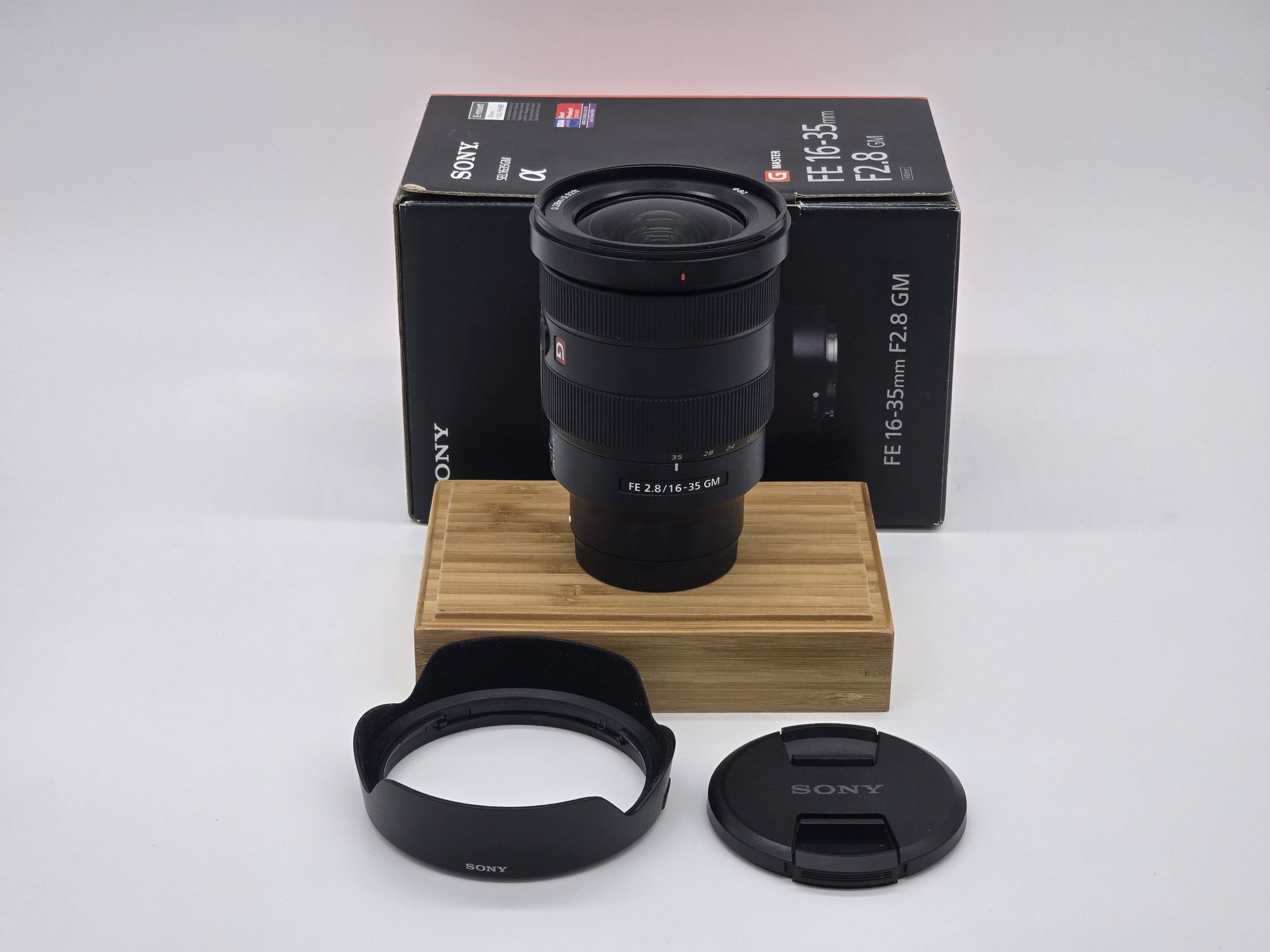
The main reason photographers pay extra for the GM line is optical quality. The 16–35 mm GM is sharp already at f/2.8 wide open and the rendering is even towards the edges. A wide zoom with such constant speed allows shooting at dusk or indoors without a tripod, which cheaper alternatives do less well, often needing to stop down to f/5.6–f/8.
For architecture it matters that straight lines stay straight. Distortion is handled with one click in post, and the body corrects it gently too if you switch on lens corrections. The anti-reflection coatings hold contrast when shooting into the light, but direct sun in the frame will still cause flare, so stop down and check the result.
Autofocus is fast and suits video, where you also appreciate being able to change composition with the zoom and aperture without refocusing the whole scene. When filming, expect slight focus breathing, which no wide zoom avoids completely.
Practical settings
- Landscape on a tripod: f/8 to f/11, ISO 100; focusing at about a metre at 16 mm gives sharpness from half a metre to infinity. At 35 mm focus further out, roughly 3–5 metres.
- Architecture: f/5.6 to f/8, tripod or level, switch in-body stabilisation off on a tripod, lens corrections on.
- Dusk handheld: f/2.8, at least 1/30 s at 16 mm, ISO 1600–3200. At 35 mm rather 1/60 s.
- Stars and night sky: f/2.8 at 16 mm is one of the most useful combinations; see Photographing stars and the Milky Way.
- Filters: the lens has a front thread for screw-on filters. A polariser on a wide angle creates bands in a blue sky, so use it carefully.
Typical mistakes
- Shooting from standing eye level. A lower position and a foreground give a landscape depth; a wide angle from eye level looks flat.
- Too close to a wall or ceiling. Lines break and edges stretch.
- Forgetting the front element. The bulbous front lens is sensitive to dust and fingerprints; carry it with the cap on and check it regularly.
- f/2.8 everywhere. Sharpness is good, but stopping down helps depth of field and the edges.
Comparison with the Tamron 17–28 mm f/2.8
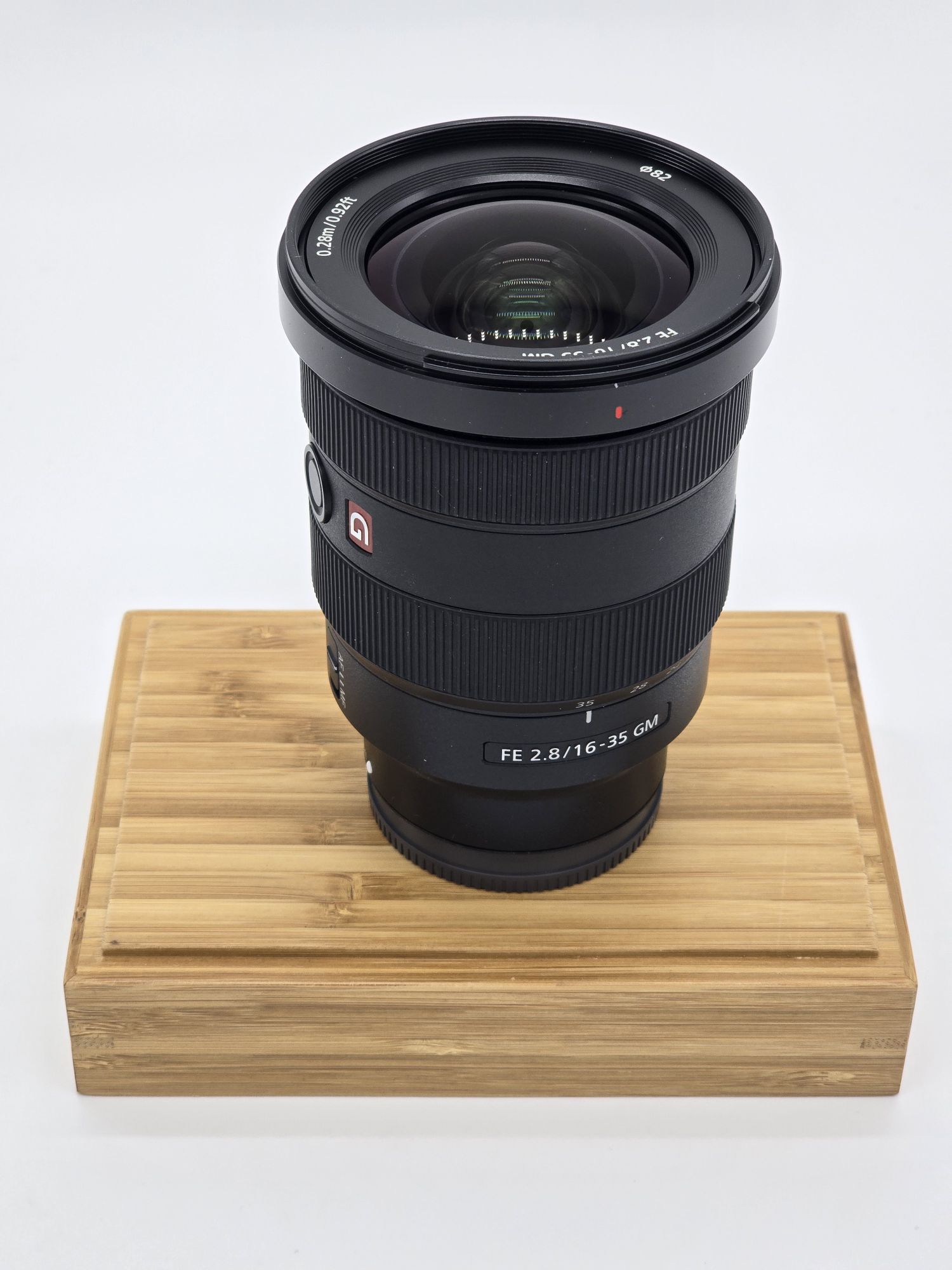
The Tamron 17–28 mm f/2.8 Di III is cheaper and lighter (around 420 g against roughly 680 g for the Sony). It is an excellent lens with a superb price-to-performance ratio. The Sony GM offers more:
- a longer range (16–35 mm instead of 17–28 mm),
- a sturdier build,
- usually better corner rendering at full aperture.
If budget and weight are the priority, the Tamron is a sensible choice. If you want top image quality and range without compromise, reach for the Sony GM. The newer Sony FE 16–35 mm f/2.8 GM II is lighter (around 550 g) and more expensive; with the used first generation you save the price difference.
What to watch for on a used copy
- Front element: fingerprints can be wiped, but fine scratches on the bulbous glass cannot be removed. Check it under oblique light.
- Zoom ring: it must turn smoothly and without play across the range. It must not bind at either end of the range.
- Focus and corner sharpness: shoot the same flat surface at f/2.8 and f/8 and compare the corners. A difference between the sides of the frame suggests a displaced element after a drop.
- Mount and hood: check the contacts, the mount and that the hood seats without play.
- Dust inside: a little dust in a wide zoom is normal. Fungus and stains inside are not; see How to check a used lens.
What I would do
If you shoot landscape or architecture and do not want to swap two lenses, I would take the 16–35 mm f/2.8 GM and stop down to f/8. If a lighter kit is enough and the budget is smaller, look at the Tamron 17–28 mm. For comparing zooms in other ranges, the article on the 24–70 mm GM II against the GM I is useful.