
Comparison
Sony A7R IV vs. A7R V used: 61 MP at a reasonable price
Sony A7R IV and A7R V share the same 61 MP resolution. What the newer generation adds, what to check on a used unit and who can do with the older model.
The Sony A7R IV and A7R V both use a 61 MP sensor, and on the used market they are cheaper than they used to be. But "sixty megapixels" is not a win for everyone: besides detail it brings big files and higher demands on your technique and your lenses. Let me go through who should pick the A7R IV, who should pick the A7R V, and what to look at on a used unit.
Who needs high resolution
61 MP makes sense where you want detail or room to crop: landscapes, architecture, large prints, reproductions, product photography. One frame can give you several compositions, which is handy while travelling when you do not have a long lens with you.
If you shoot mostly for social media, family or the web, you will not use that resolution and will only feel it on your hard drive. For sports or fast kids, bodies with lower resolution and faster sensor readout are better, for example the Sony A9.
What actually changed between the IV and the V
Both bodies have a 61 MP sensor; the difference is mostly what surrounds it. According to the manufacturer:
- Autofocus: the A7R V has a dedicated AI processing unit and recognises more kinds of subjects (people, animals, birds, insects, cars, trains, aircraft). The A7R IV can track and focus on eyes too, but without such broad detection.
- Stabilisation: Sony rates the A7R V's as clearly better (up to 8 EV against 5.5 EV on the A7R IV). In practice you can hand-hold longer shutter times, which at 61 MP means more sharp frames.
- Viewfinder and screen: the A7R V has a finer viewfinder (9.44 M dots against 5.76 M dots) and a screen that can be turned into more positions.
- Slots and video: the A7R V slots also accept CFexpress Type A cards, while the A7R IV has two SD UHS-II slots. The A7R V can record 4K 60p and 8K video; the A7R IV stops at 4K 30p.
- Burst: both shoot around 10 frames per second, nothing dramatic changed there.
The practical conclusion: the A7R V is the more comfortable tool in every respect, but for static genres (landscapes, architecture, tripod work) the A7R IV gives you the same image quality for much less money. On the used market the price gap is usually counted in tens of thousands of crowns.
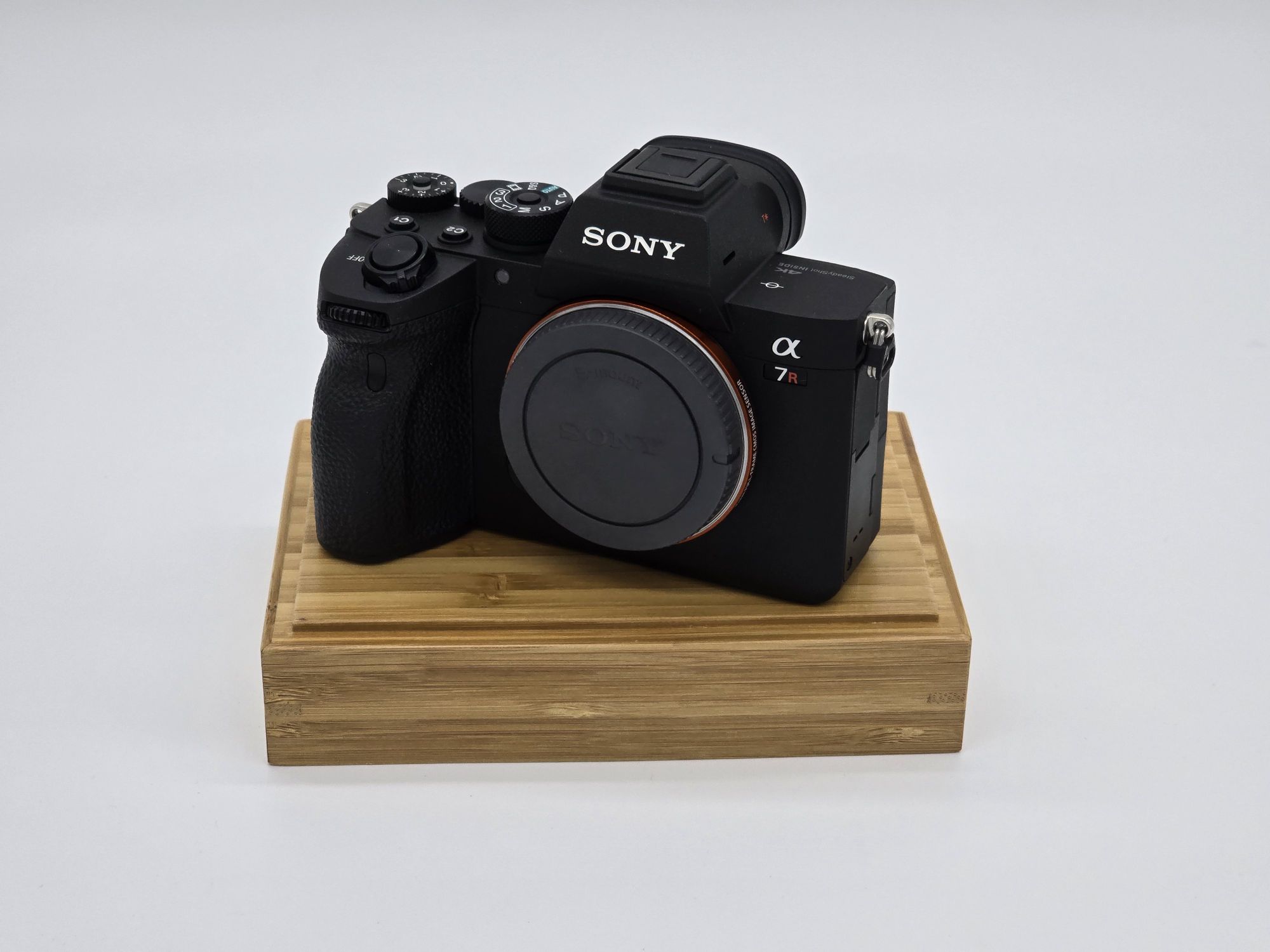
What to check when buying used
For both bodies, follow the procedure from How to check a used camera before you buy. The points that matter more at 61 MP:
- Sensor: dust and spots show up sooner at high resolution. Shoot a bright surface at f/16 and inspect it at 100% zoom.
- Stabilisation: test with a long lens whether the image jumps in the viewfinder and whether the stabiliser rattles when switched on.
- Shutter and controls: go through the dials, joystick and buttons, try both silent and mechanical shooting and listen for an even shutter sound.
- Ports and slots: put a card in both slots and try USB-C, HDMI and the microphone jack. Slots and ports are where rough handling usually shows.
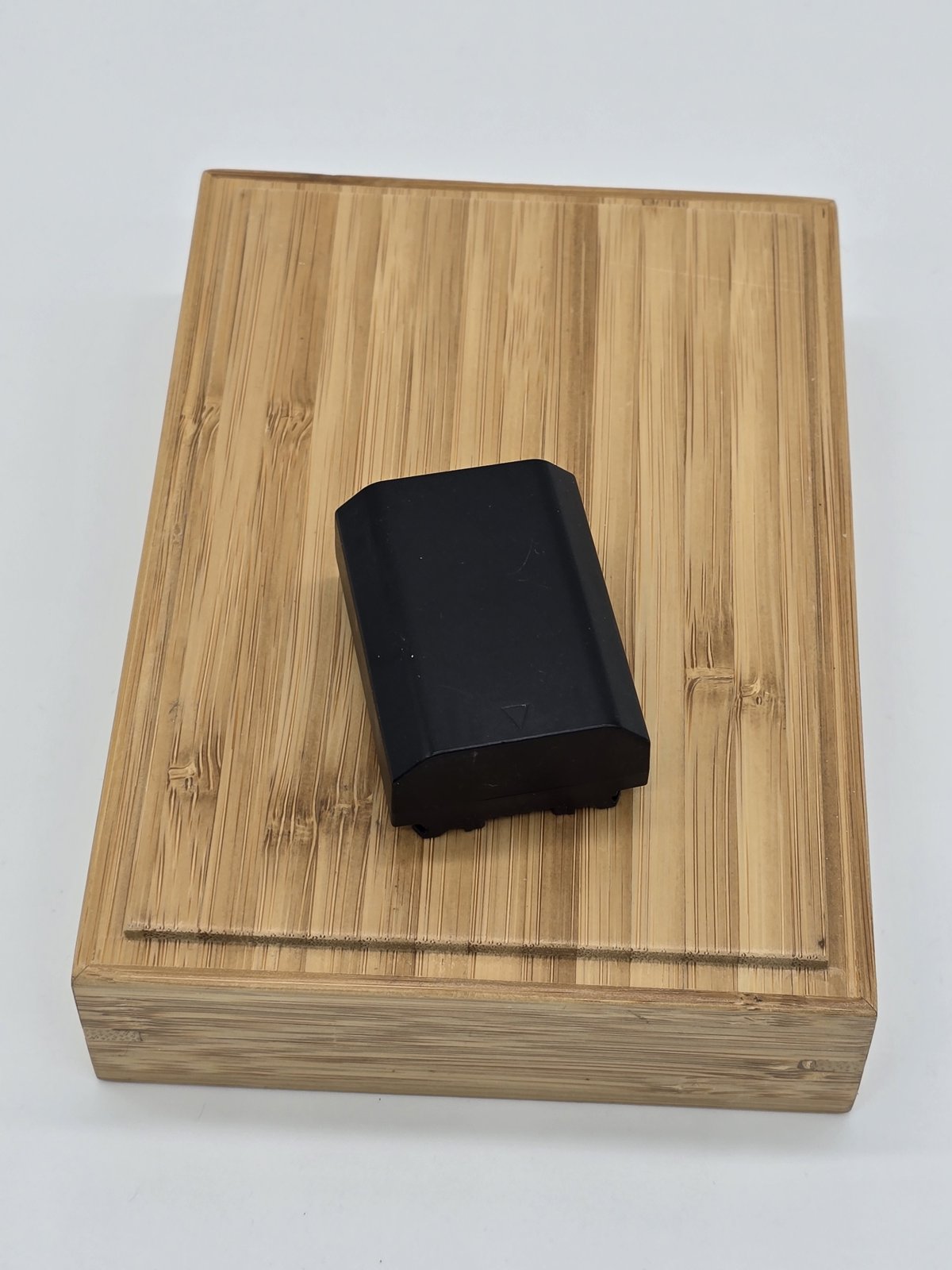
- Battery: both bodies use the NP-FZ100 battery. A genuine one with reasonable capacity saves you trouble on longer shoots.
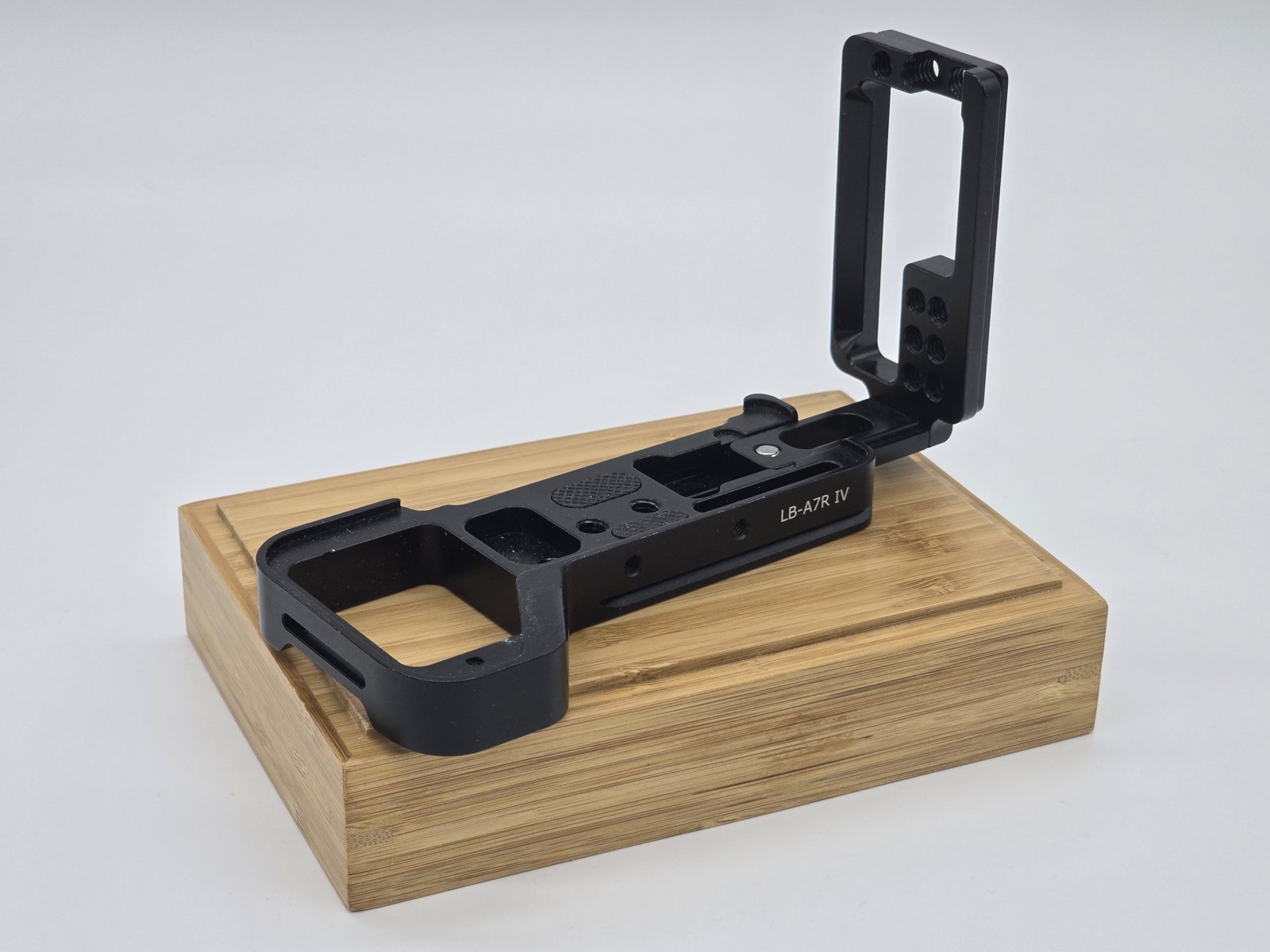
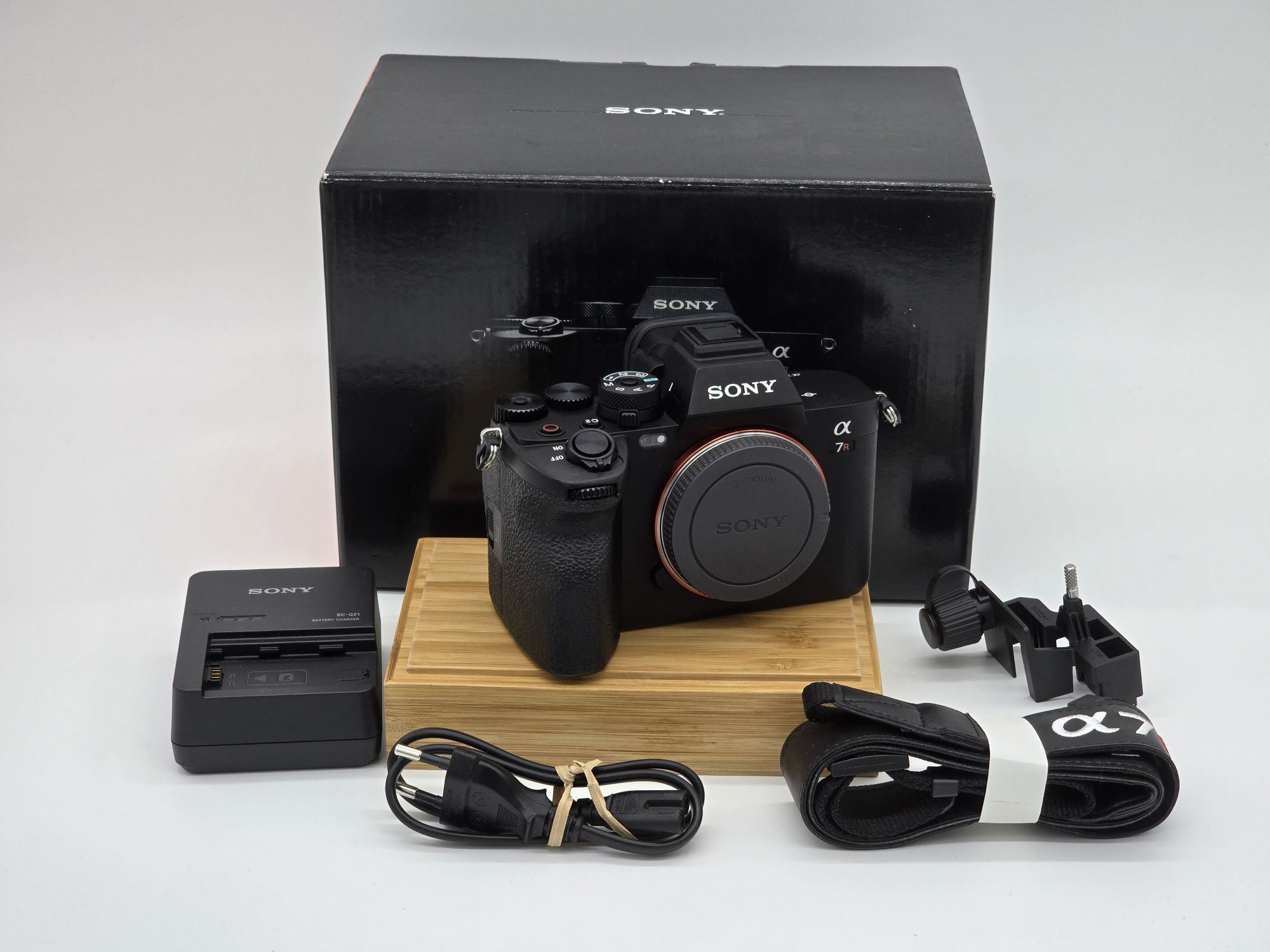
Accessories that suit these bodies (a battery, an L-bracket) are in the cards below; they show what I currently have on offer.
Lenses, cards and computer
61 MP immediately exposes weak glass. With an old adapted lens or a cheap zoom you will see soft corners and colour fringes that nobody noticed at 24 MP. Rely on modern optics with good resolution, ideally fast zooms and G Master primes, for example the Sony FE 16–35 mm f/2.8 GM for landscapes.
Watch your shutter speed too: the old "1/focal length" rule is not enough for a sharp hand-held frame. At 61 MP use 1/(2 × focal length) instead, so 1/160 s or faster at 70 mm, and for landscapes use a tripod with a two-second self-timer or the electronic first curtain.
Files are big: an uncompressed RAW is in the order of 120 MB, compressed modes much less. Get fast UHS-II cards, plenty of disk space and a computer with at least 16 GB of RAM, otherwise editing in Lightroom will drag. Both models also have Pixel Shift, which combines several frames into one of even higher resolution; for static scenes on a tripod it is a nice bonus, and the files are merged in Sony Imaging Edge.
What I would do
- I shoot landscapes, architecture or products from a tripod and my budget is limited: A7R IV. You get the same resolution and the savings go towards a good lens.
- I shoot hand-held, often with a telephoto, and want better autofocus, a better viewfinder and the occasional video: A7R V.
- I mainly need speed and sports: neither; choose the Sony A9 or another body.
A good lens and a tripod affect the final quality more than the difference between the two generations of the body. Current pieces including accessories are in the shop.