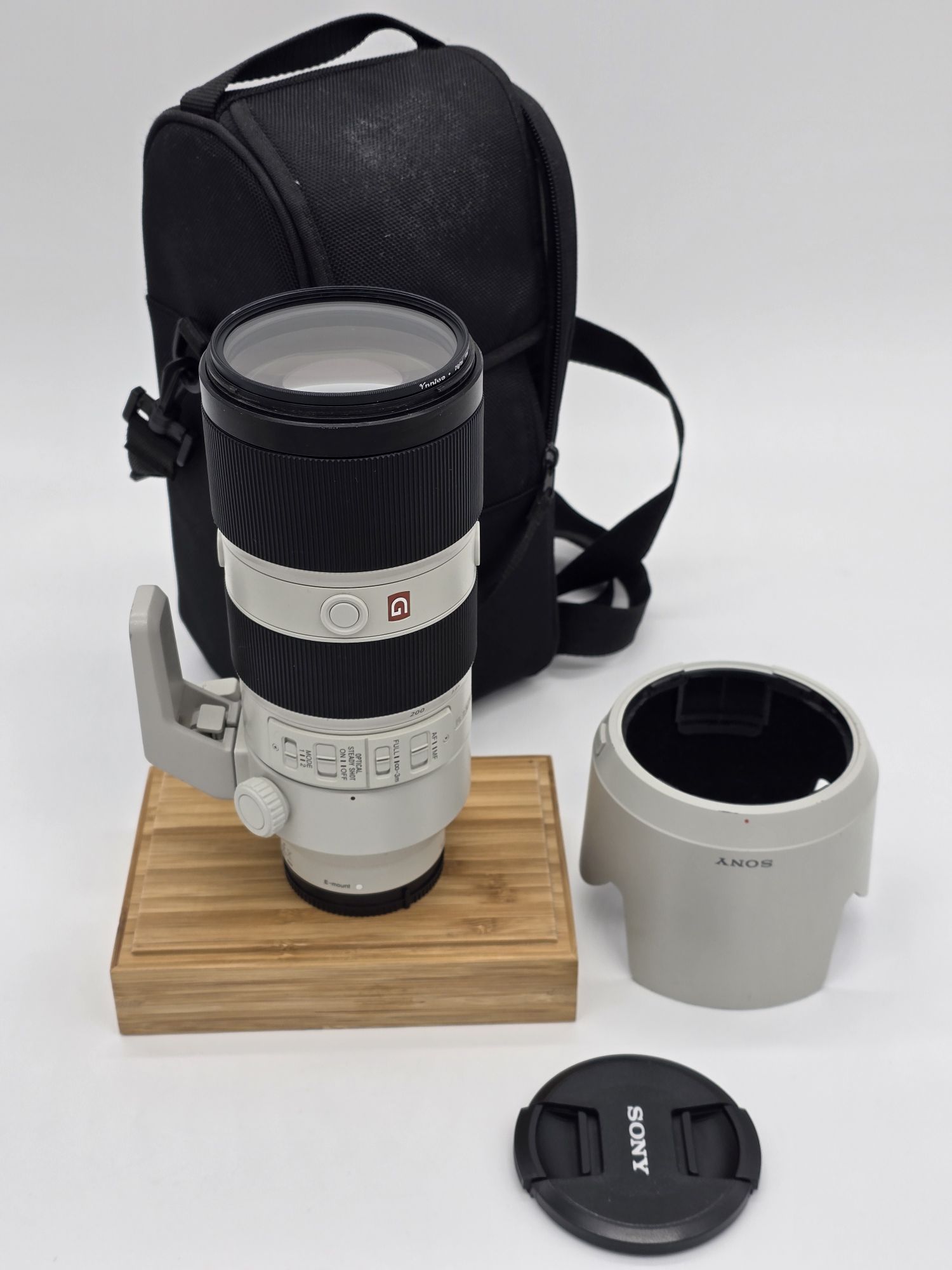
Comparison
Sony 70–200 mm GM vs. G: which telephoto zoom should you choose?
I compare the aperture, weight and performance of the Sony FE 70–200 mm f/2.8 GM and f/4 G to make choosing on the used market easier.
The 70–200 mm range covers a wide variety of genres, which is why choosing this lens is a big decision for most photographers. On the used market, you'll most often be deciding between two versions: the legendary f/2.8 GM and the lighter f/4 G.
The difference in price and performance is significant. Let's look at what both lenses offer in practice.
f/2.8 vs. f/4 in practice
The difference between f/2.8 and f/4 is one stop. The f/2.8 version lets you shoot at lower ISO, blurs the background more and focuses faster in low light. If you often shoot weddings, theater or night scenes, f/2.8 is indispensable.
In the same light, the f/4 version needs a shutter speed twice as long or double the ISO. But modern Sony bodies (A7 III and newer) handle ISO 3200–6400 with low noise. For daytime shooting, outdoor portraits and landscapes, the difference only shows in demanding conditions.
Weight and travel
Here the difference is substantial:
- the first-generation GM weighs almost 1.5 kg
- the second generation (GM II) is much lighter, around 1 kg
- the f/4 G weighs roughly 840 g.
A lighter lens tires your hand and shoulder less during a full day of shooting. If you're planning long hikes or traveling with a strict baggage limit, the f/4 is clearly more practical. In the studio or for static shooting, weight doesn't matter as much.
Portraits and sports
For portraits, the f/2.8 GM is still king thanks to its very soft transition between the sharp and blurred parts of the image. If you want a “painterly” look with a smooth background, the GM gives you quality the f/4 will struggle to match.
For sports and action, the f/2.8 is faster and better at separating the subject from a distracting background. The f/4 version is very sharp, but its autofocus can be a touch slower in demanding conditions.
However, if you shoot portraits in sunlight, where you can afford f/4 and the background is still nicely blurred, the f/4 is perfectly sufficient.
Price difference
On the used market, there's usually a big price gap between the two. The f/2.8 GM is more expensive thanks to higher demand and its reputation. The f/4 G tends to be underrated, even though it offers most users top-tier optical quality.
If you're on a limited budget, I consider the f/4 G a smart choice. It isn't a compromise in image quality but rather in aperture – which in practice you can often make up for with a tripod or higher ISO.
Conclusion
Both lenses are excellent. If you're a professional who needs maximum aperture and speed, or you can simply afford the f/2.8, go for the GM.
For most enthusiasts who want top sharpness, lower weight and good value for money, the f/4 G will bring more joy to your shooting without weighing you down.

Objektiv
Sony FE 70-200mm f/4 G