
Comparison
Nikon Z 24–70 mm f/2.8 S vs. alternatives: why the original still leads
The Nikkor Z 24–70 mm f/2.8 S against alternatives for the Z mount: the Z 24–70 f/4 S, the Tamron 28–75 G2 and the Nikkor 28–75. What the original does best and what to check on a used unit.
A standard 24–70 mm f/2.8 zoom is a workhorse: weddings, reportage, travel, portraits, video. For Nikon Z that lens is the original Nikkor Z 24–70 mm f/2.8 S, which keeps a high price even on the used market. There are reasons for that, but not everyone has to want it. I will go through what it does well, what the alternatives are and what to look at on a used unit.
Why the Z 24–70 mm f/2.8 S stays at the top
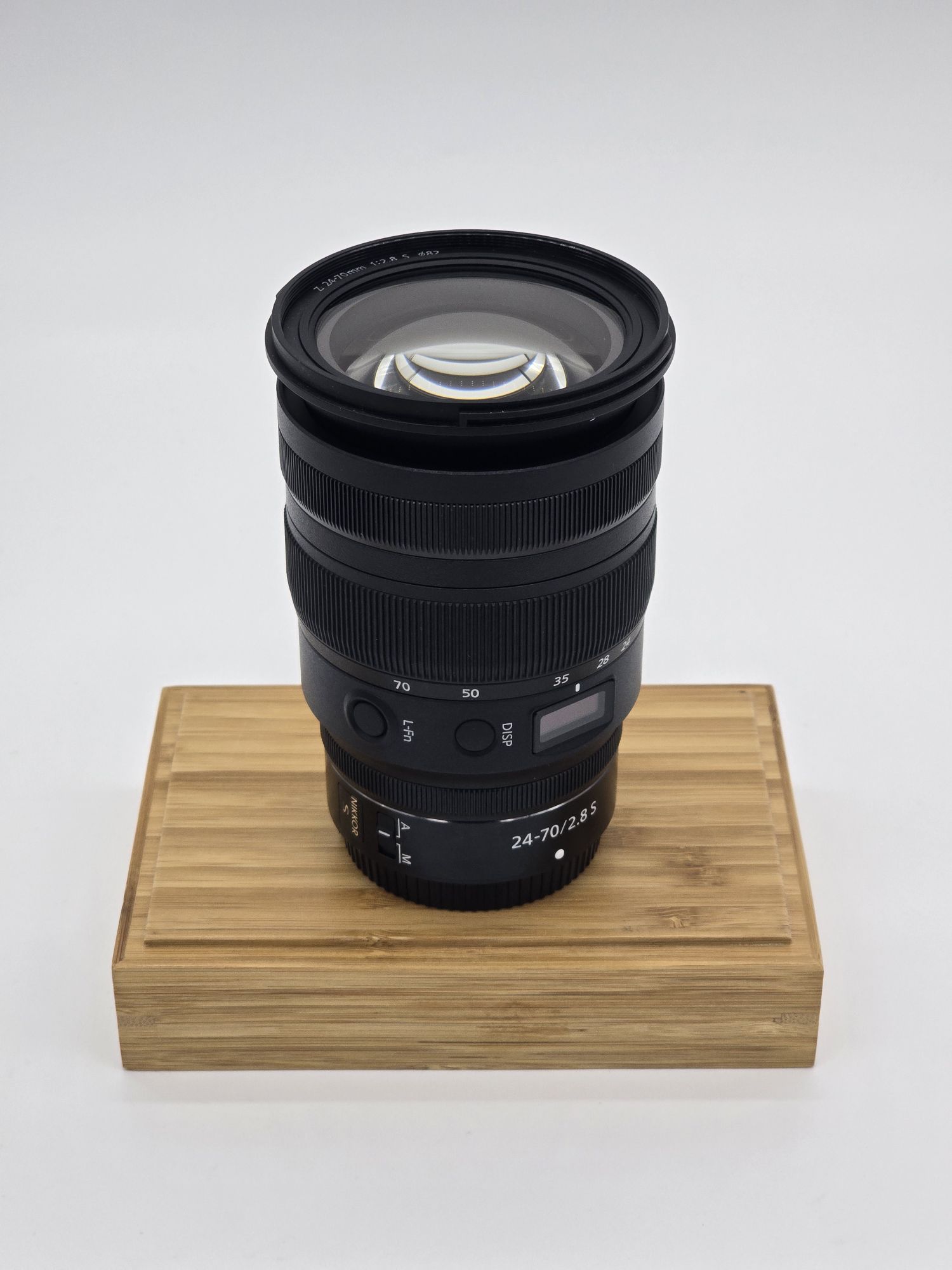
The lens belongs to the S line, Nikon's top optical class for the Z mount. Its design of 17 elements in 15 groups makes use of the large diameter of the Z mount and is sharp into the corners of the frame from the wide-open f/2.8. That matters on higher-resolution bodies such as the Z7 II or Z8, but even a Z6 II user will appreciate the sharpness.
Practical features: the barrel is sealed against dust and moisture, it has a programmable control ring, an OLED info display showing aperture and distance, and a minimum focus distance of about 38 cm. It weighs roughly 805 g and uses an 82 mm filter. For all-day hand-held shooting that is not negligible.
Alternatives for the Z mount
It used to be that there was nothing besides the original. Today you can choose from:
- Nikkor Z 24–70 mm f/4 S: considerably lighter (around 500 g) and cheaper, with excellent optics. One stop less light, but for landscapes, travel and documentation in good light it is often enough.
- Tamron 28–75 mm f/2.8 Di III VXD G2 for Z: a fast zoom that is shorter at the wide end but lighter and cheaper. A detailed comparison with Sony is in the article Tamron 28–75 mm G2 vs. Sony 24–70 mm GM; the principles are similar.
- Nikkor Z 28–75 mm f/2.8: a cheaper original f/2.8 with a narrower range.
- Older Nikkor F 24–70 mm f/2.8 on the FTZ adapter: works with autofocus and f/2.8 brightness, but it is larger and heavier and does not reach the optical level of the S line.
The well-known Sigma 24–70 mm f/2.8 DG DN Art is made for the Sony E and L mounts. When searching the used market, check which mount a unit is for; a lens for Sony will not attach to Nikon Z.
Autofocus and video
Focusing is handled by two quiet stepping motors. It focuses quickly and almost silently, which anyone recording sound on the body will appreciate. Eye and subject tracking is mostly done by the body; the lens keeps up with newer models. For video, check focus breathing on your own body before you build a job on it. Older adapted F lenses on the FTZ are slower and less quiet when focusing.
If you shoot sports or fast-moving subjects, choose the body by its autofocus. For example the Nikon Z6 III used or the Z6 II pair well with this lens.
How to use it
- Portrait: 70 mm, f/2.8, 1/250 s, ISO according to the light. The background separates nicely, but for a softer rendering consider a prime such as an 85 mm.
- Wedding and reportage: 24–70 mm on one body, f/2.8, shutter above 1/125 s, ISO 800–3200 in dim light. You can work without flash.
- Landscape: 24 mm, f/8, tripod or ISO 100–400; stop down to f/5.6–8 if the corners need more.
- Interiors and architecture: 24 mm, f/5.6–8, keep the body level so the verticals do not distort.
What to look at on a used unit
The general procedure is in the article How to check a used camera before you buy; for this lens, in addition:
- Front and rear element: no deep scratches, greasy marks or fungus (against the light you will see threads or haze). More in the guide Plíseň v objektivu: jak ji poznat a jak skladovat techniku.
- Zoom and focusing: check that the barrel has no play as you zoom. The movement must be smooth, without grinding and noises.
- Centring: shoot a flat wall or newspaper at f/2.8 at 24 mm and 70 mm and compare the left and right edges. A clear difference means decentred optics.
- Autofocus: focus close, far and back again; look for hesitation and unusual sounds.
- Ring and display: the control ring should click evenly and the OLED display show all the data.
- Accessories: the lens hood and both caps belong with it; a missing hood has to be bought separately.
Used prices stay high because it is a popular and expensive lens. That does not apply across the board, however: a fully working used unit is still considerably cheaper than a new one and its quality does not change.

What I would do
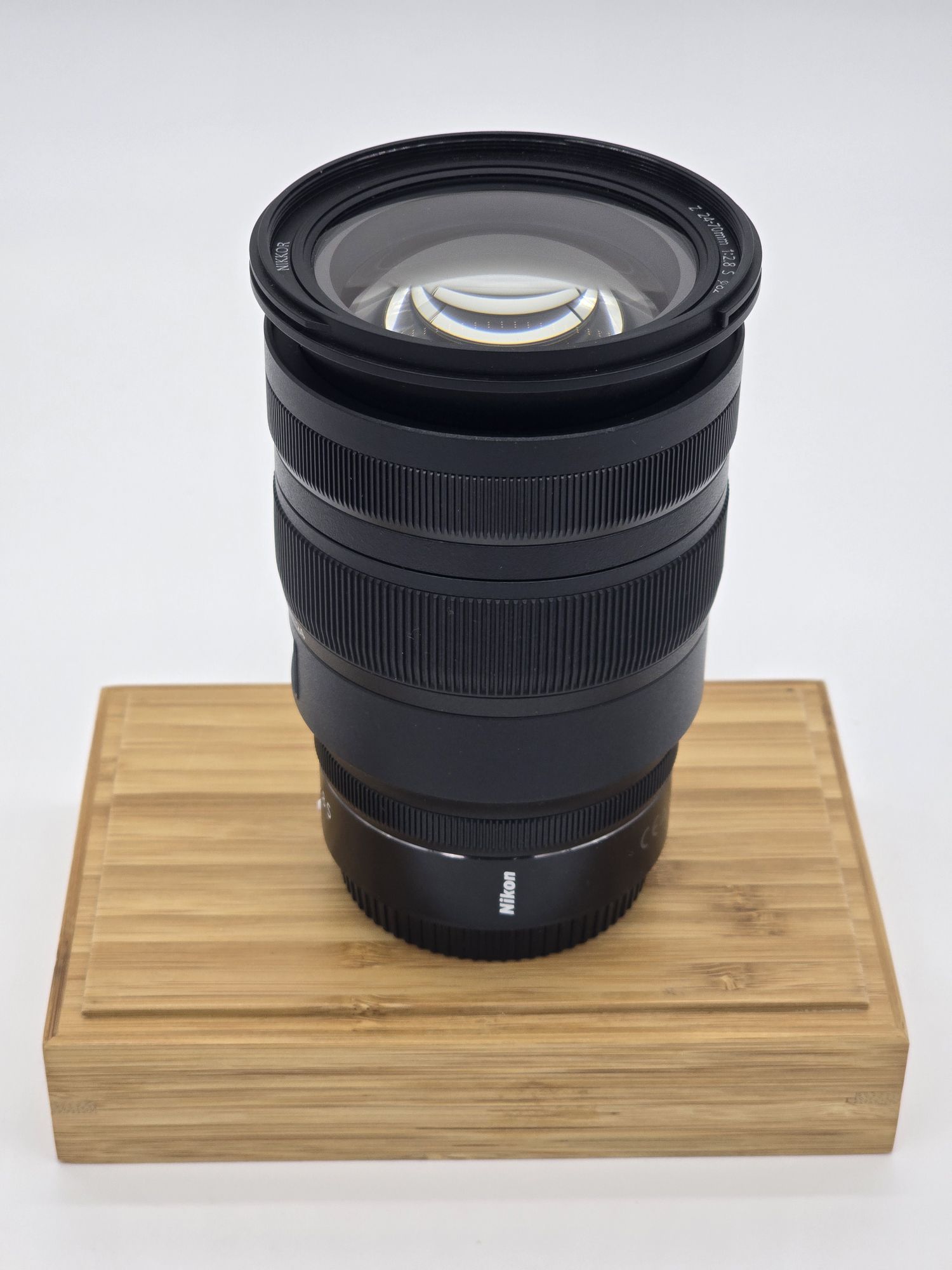
If I shoot for clients, need f/2.8 and do not want to deal with anything, I take the original Z 24–70 mm f/2.8 S and when buying used I check the centring and the zoom. Whoever carries body and lens all day while travelling should consider the Z 24–70 mm f/4 S, and whoever wants a cheaper f/2.8 should look at the Tamron 28–75 mm or the Nikkor Z 28–75 mm. What I currently have on offer you will see in the card above and in the shop.