Buying advice
Family and travel: a light body and fast autofocus
A camera for kids and trips should be light, quick to focus and easy to handle. What to check on a used body and lens, and which combinations make sense.
You do not need the most expensive gear for family photography. You need a camera you will actually carry every day, one that locks focus on a child before they turn away, and one that will not hurt your neck after three hours on the road. Weight and autofocus are the two things worth your attention. Everything else, from megapixels to burst speed to 4K video, is usually secondary for kids and trips.
What really matters for family photos
- Weight of the whole kit. The body is only half of it, the lens comes on top. A full-frame body with a heavy fast zoom easily passes a kilo and a half, and that kit stays at home. What gets carried is what fits a small bag or backpack without pain.
- Eye and face tracking. With running children, what matters is whether the body finds the eye on its own and keeps it. You cannot move the focus point by hand on a two-year-old. Newer mirrorless bodies do this reliably, and on used units from recent years it is standard.
- Controls that work without menus. When a child does something priceless, you have a second. A camera set to auto ISO and aperture priority with a clear layout costs you less time than any difference in sensor quality.
- In-body stabilisation. It helps with slower shutter speeds indoors, in a church or on an evening walk. It does not freeze a child's movement, though. Only a short enough shutter speed does that.
Which body fits
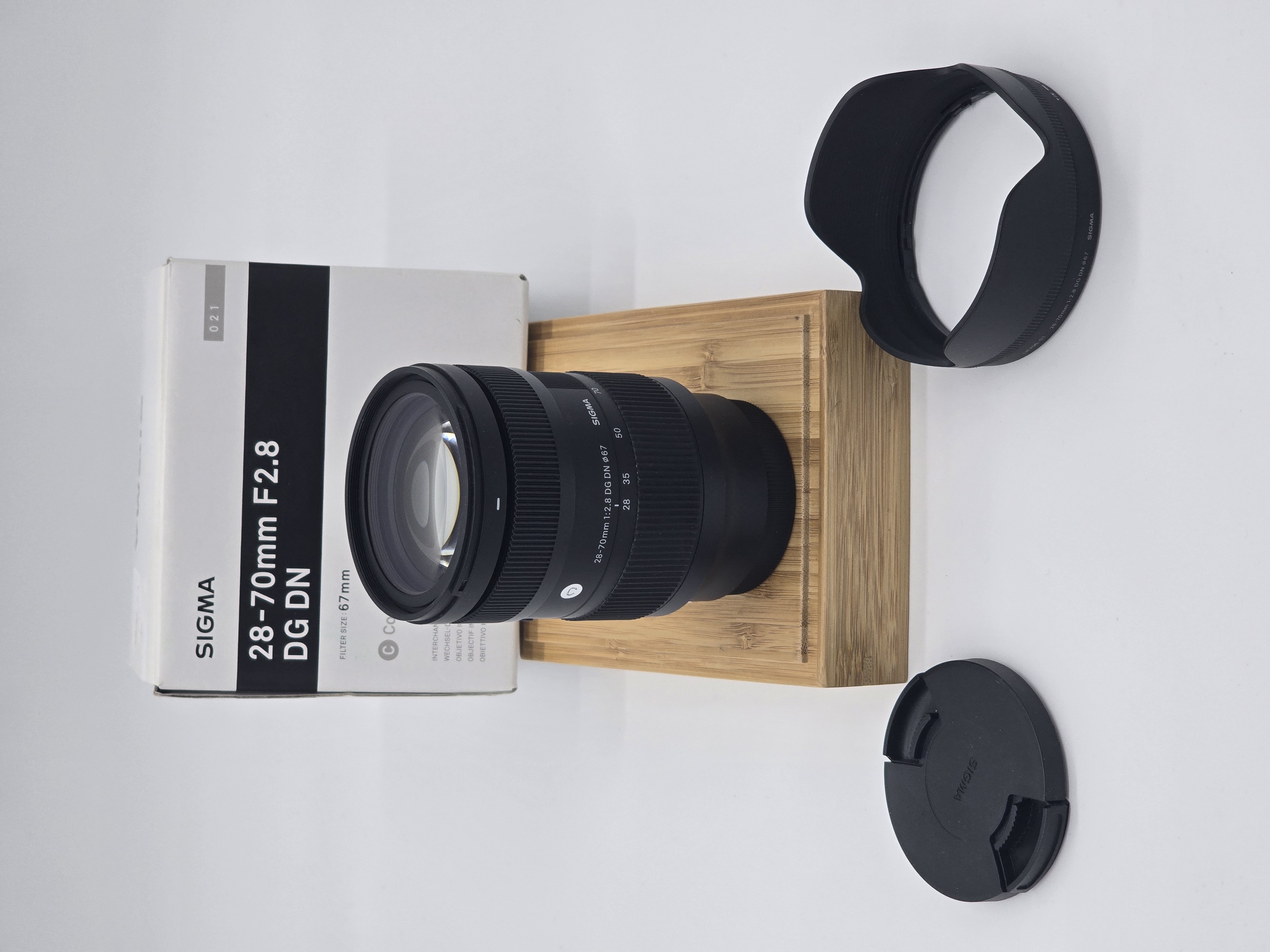
For family and travel I would put the smaller full-frame bodies first. The Sony A7C weighs around 510 g with battery and card, has in-body stabilisation and eye detection. In return for a smaller viewfinder and a single card slot you get a body that fits a small bag. The Canon EOS R8 is a little lighter still (around 460 g) and has fast autofocus that recognises people and animals, but it has no in-body stabilisation and only one card slot. For slower shutter speeds indoors you therefore need a stabilised lens or a higher ISO.
If you want a bigger grip and two card slots, the Sony A7 IV and Nikon Z6 II are noticeably heavier (around 660 g and 705 g) and suit someone who shoots more than family. Small used APS-C bodies are lighter still, but full frame has clearly more headroom in ISO for dim light and movement.
Lens: one for everything, or a fast prime
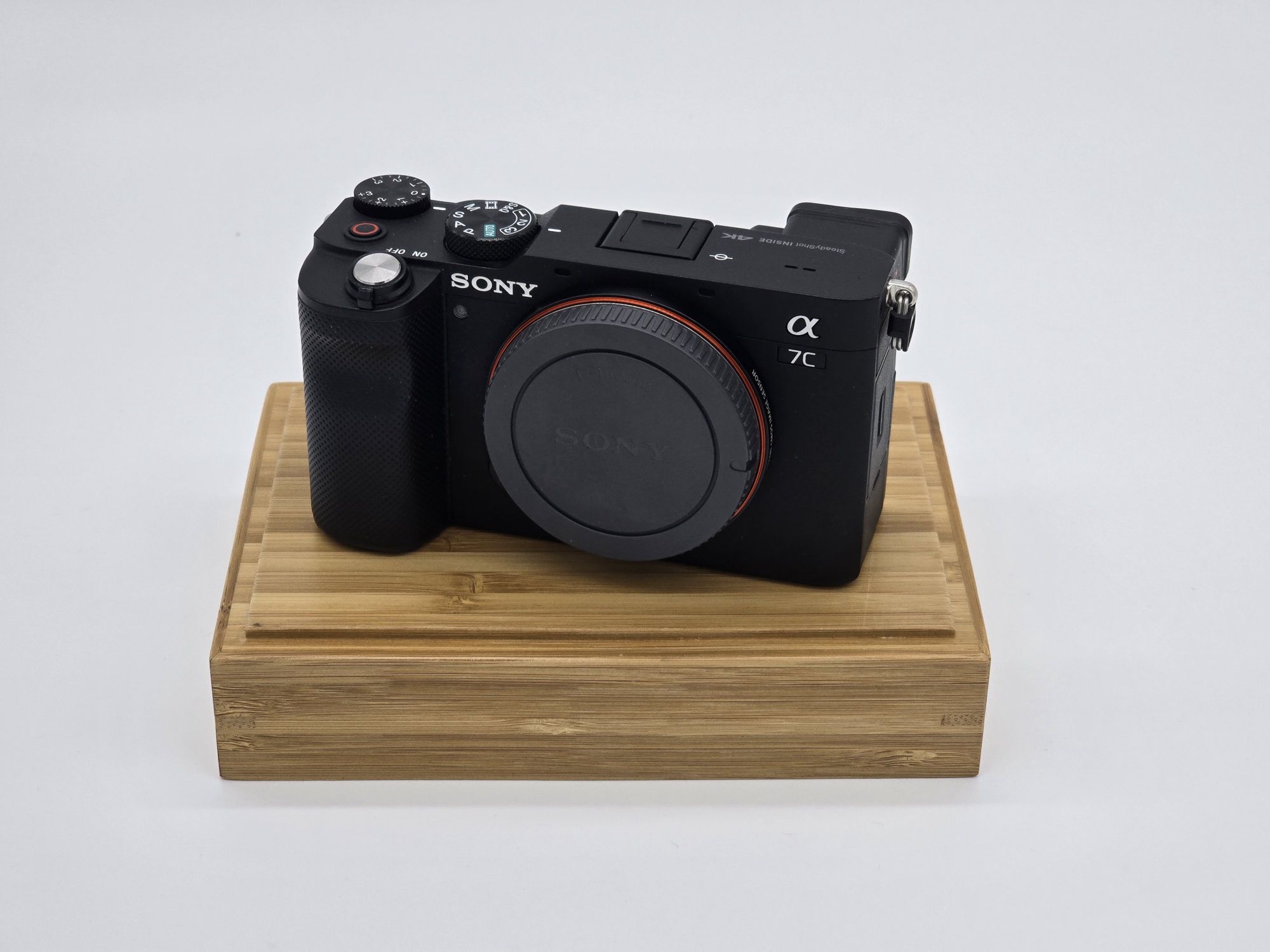
For a family the most practical choice is one all-round zoom such as a 28–70 or 28–75 mm f/2.8. It covers everything from a living room to a portrait, and f/2.8 is enough indoors. The Sigma 28–70 mm f/2.8 Contemporary is clearly smaller and lighter than a 24–70 mm f/2.8 GM. Go for a fast 35 or 50 mm prime if you do not mind zooming with your feet and want dark interiors and soft backgrounds.
Leave the heaviest f/1.2 and f/1.4 lenses aside if the goal is to carry the camera every day. The difference against f/1.8 is real, but weight and price grow faster than the benefit.
Practical settings for kids
For running children outdoors use 1/500 s or faster, f/4 to f/5.6 and auto ISO. Indoors try f/2.8, ISO 1600–6400 and at least 1/250 s. For children sitting still, reading or eating, 1/125 s is enough if the body is stabilised. Set focus to continuous with eye tracking.
Be careful with a fully electronic shutter on fast-moving children. Some bodies distort quick movement with it, and artificial light causes banding. Indoors the mechanical shutter is the safer choice.

What to check on a used unit
On the body, check that autofocus reacts equally fast at both ends of the lens and that eye detection also works in weaker light. Inspect the screen, the viewfinder and the seal of the card slot, because family cameras live in pockets and bags. On a lens look for play in the mount, dust or fungus inside and working stabilisation if it has one. The full procedure is in the article How to check a used camera before buying.
The shutter count on a family body is usually lower than on a working one, but that does not mean there is no wear. The look of the body and the state of the controls say more about how it was used than the number alone.
What I would do
For family, trips and holidays I would take the lightest body that does not force you to compromise on autofocus, and one fast zoom covering roughly 28–70 mm. Add primes only when you know what is missing. And before buying anything, hold the body in your hand: a comfortable grip and reach to the controls decide more than the difference in specifications.
What I currently offer you will see in the cards below. A comparison of the two most common full-frame bodies is in the article Sony A7III vs A7IV, more in the shop.