
Buying advice
Which lens for portraits, reportage and everyday shooting
Three focal lengths, 35, 50 and 85 mm, cover most shooting. Which to buy first, which settings to use and which mistakes to avoid in portraits and reportage.
When you work out what to put in the bag for everyday shooting, you often focus on the body. But the character of the image comes from the lens. Three prime focal lengths – 35, 50 and 85 mm – cover most situations, and if you divide them by use, you see which one you need first.
- 35 mm captures context and suits reportage and street.
- 50 mm is the universal all-rounder.
- 85 mm separates the subject from the background.
The examples are from the Sony E system, where fast GM lenses with f/1.4 exist: the Sony FE 35 mm f/1.4 GM, FE 50 mm f/1.4 GM and FE 85 mm f/1.4 GM. The same focal lengths exist for Canon RF and Nikon Z under different names.
Why exactly 35, 50 and 85 mm
Focal length changes two things: how much you see and how the perspective looks. A wider lens shows the surroundings and pulls the viewer into the scene; a longer one compresses distances and separates the subject from the background.
- 35 mm makes you work with space. You stand close and part of the surroundings fits in. Ideal for reportage, street and travel.
- 50 mm sees roughly as you see. For a portrait from the waist up, food, details and everyday shooting.
- 85 mm is the classic portrait focal length. It has a pleasant perspective for faces and nicely blurs the background at a wide aperture.
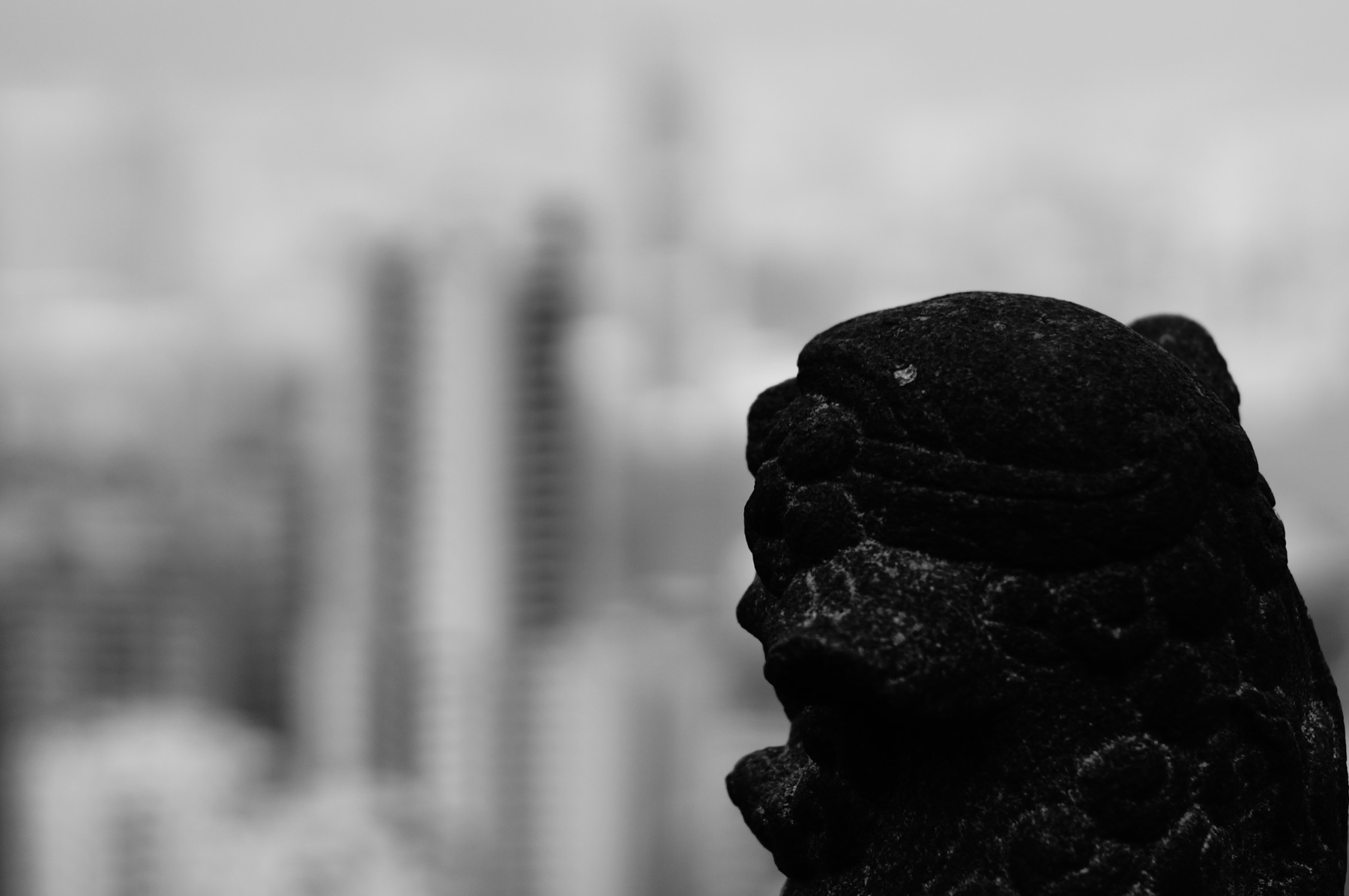
Depth of field is easier to grasp in numbers. On full frame at 85 mm, f/1.4 and two metres distance, the sharp zone is about 5 cm. That means that with a slightly tilted face, both eyes may not be sharp. At 50 mm, f/1.4 and the same distance it is around 13 cm.
Practical settings
- Portrait at 85 mm: aperture f/2 to f/2.8, shutter at least 1/250 s, automatic ISO up to 3200–6400. Switch on eye detection and focus on the nearer eye. Use f/1.4 when the light is poor, not out of habit.
- Reportage at 35 mm: aperture f/4 to f/5.6, shutter 1/250 s, ISO to suit the light. At f/8 focused at three metres, roughly two to seven metres is sharp and you do not have to guard every frame.
- Universal 50 mm: f/2.8 for two people in the same plane, f/4 for a small group or when people move.
- RAW and white balance: RAW pays off for skin. In mixed light set white balance manually or unify it in post.
- Backlight: raise exposure by two thirds to one stop, or the face falls into dark shadow.
The most common mistakes
- Focusing on the eyelashes or the nose instead of the eye. At 85 mm f/1.4 you see it at once. Use eye detection and check the frame on the screen with zoom.
- Two people at different distances at f/1.4. One will be soft. Stop down to f/2.8–f/4.
- A portrait too close at 35 mm. The nose and forehead look bigger. Step back and use a longer focal length for portraits.
- A slow shutter on a moving subject. Even with a great lens, 1/60 s smears movement.
- Buying for prestige. A fast GM lens will not replace light, the background or composition.
Choosing a body on the used market
When buying a body from a listing, watch the battery condition and the shutter count. On older models look at shutter wear, but it is a consumable part, so the function of the whole is more important. Check the sensor and the seals under light; a damaged sensor is an expensive repair. Test eye detection on a real face, not just on demos. The A7 IV or the older A7 III pairs naturally with Sony lenses; the detailed procedure is in How to check a used camera before buying.
Mind the system: Sony FE lenses belong on the Sony E mount and you can practically not fit them to Canon RF or Nikon Z. So choose the system first and the glass afterwards.
Combining lenses and body
- Street and reportage: 35 mm. The Sony 35 mm f/1.4 GM is fast, but if you do not need it, compare the difference against the FE 35 mm f/1.8.
- Portrait: 85 mm. See the review of the FE 85 mm f/1.4 GM and the general guide Portrait: what to shoot with.
- All-round use: 50 mm. See the FE 50 mm f/1.4 GM.
What I would do
I would start with one prime, 50 or 85 mm, depending on what you shoot most. If you mainly shoot people, go straight to 85 mm; if street and travel, to 35 mm. Pair it with a cheaper body, because light and composition matter more than the price of the kit. What I currently offer is in the cards below.
Tell me what you shoot most – I will say which focal length to start with.