Buying advice
A second body as backup for paid jobs: what to buy and how to set it up
Which second body to choose as backup for a paid job, what to check on a used unit and how to set it up so you can carry on straight after a failure.
On a paid job a second body is insurance, not a luxury. A wedding, a corporate event or a christening cannot be repeated, and when your camera stops responding halfway through the day there is no time to dig through menus. A second body is more than a spare in the bottom of the bag: a well-chosen and pre-set one lets you carry on within two minutes of a failure, and between shots it gives you a second focal length within reach. Here is how to pick one on the used market and what to do before you ever need it.
What a backup body must do
A backup has to meet four requirements, and most of them you can check when you choose.
- The same mount. Lenses must move freely between the bodies. An adapter between brands is fine for a hobby, not for paid work: you often lose fast autofocus or stabilisation.
- The same battery. The Sony A7 III and A7 IV use the NP-FZ100, the Canon R6, R6 Mark II and R7 use the LP-E6NH, and the Nikon Z6 II and Z6 III use the EN-EL15c. One set of batteries then serves both bodies.
- Two card slots. On a job you want to write to both cards at once. If one fails, the pictures are still on the other.
- Similar controls. The best backup is one where you do not hunt for buttons. That means the same brand and, ideally, the same generation.
Which models make sense
All the bodies below are full frame (except the R7) and have two card slots. The exact units change; what I currently offer you will see in the cards at the end of the article.
- Canon EOS R6 and R6 Mark II. The R6 has 20 MP, the R6 Mark II 24 MP and better video. Both are dependable reportage bodies with identical handling, so you switch between them without thinking. Two SD slots.
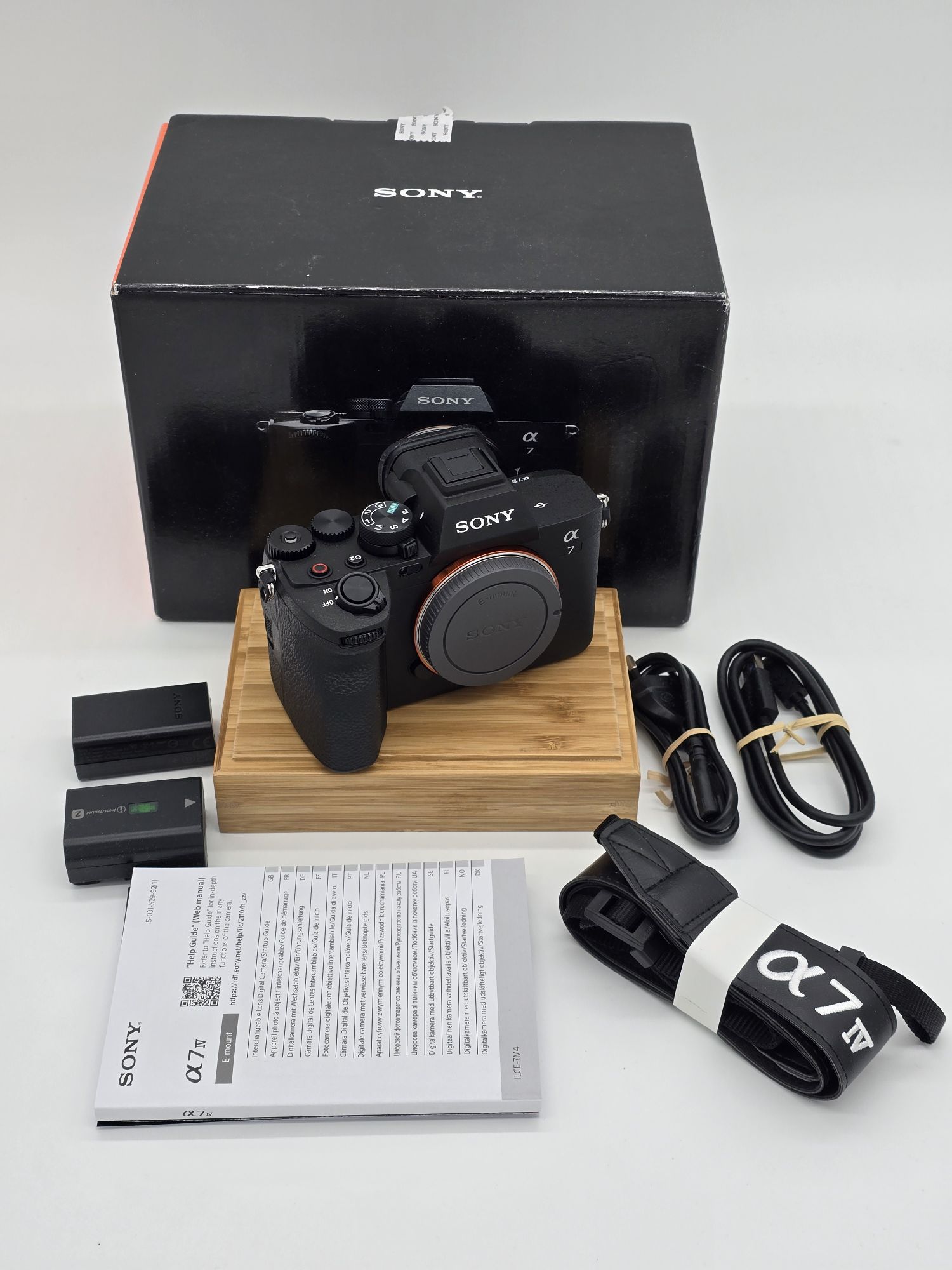
- Sony A7 III and A7 IV. The A7 III (24 MP) is the cheapest route to a backup in the Sony system; the A7 IV (33 MP) has more modern controls and viewfinder. The A7 IV works well as both main and backup body.
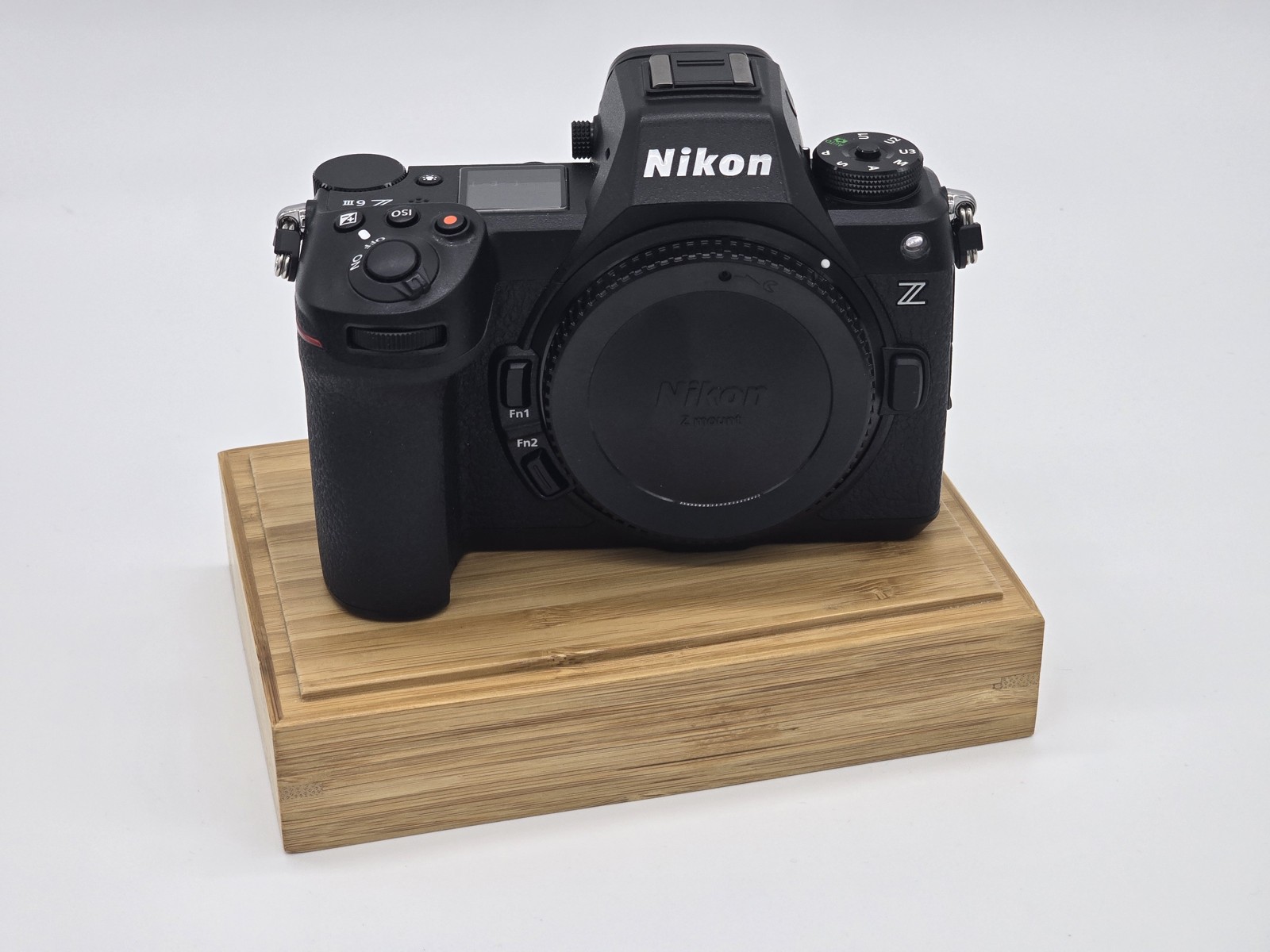
- Nikon Z6 II and Z6 III. The Z6 II (24.5 MP) is a proven backup for Nikon and the Z6 III is newer and faster. One slot takes CFexpress (and XQD on the Z6 II), the other SD.
- Canon EOS R7. An APS-C body with 32.5 MP, smaller and lighter, giving a tighter effective field of view. It suits as a backup to an R6, especially if you also shoot sport or wildlife.
A difference in resolution between main and backup body does not matter. What matters is that both files can be processed the same way in Lightroom or Capture One.

Lenses: how to share them between two bodies
A backup is also a second focal length. On a job where you shoot both wide and long, it pays to put a standard zoom (24–70 mm) on the main body and a telephoto or a fast prime (50 or 85 mm) on the second. Between frames you just swap bodies instead of lenses. If the main body fails, you put the zoom on the second one and carry on.
The rule: a lens you need more than half the time must fit both bodies instantly. So do not buy a backup body from a different system because of one interesting lens.
Settings worth doing in advance
It takes an hour at home and saves minutes on location.
- Identical menus. Set custom buttons, modes, file format and RAW size the same on both bodies. If the body can save its settings to a card, use that; otherwise photograph the menu screens.
- Synchronised clocks. Set both clocks to the same second so the files sort in order by time.
- Mirroring to both cards. Write every frame to both cards. Format the cards in the camera before every job.
- White balance and profile. The same profile and white balance, or you end up with two sets of images and different skin tones.
- Safe shutter speeds. Handheld, keep at least 1/250 s for people in motion and let ISO run automatically up to a sensible limit such as ISO 6400, so a key frame is not lost to blur.
The most common mistakes
- The backup sits untested in the bag. Before a job, switch it on, take a few frames and check that it writes to the card.
- It uses a different card type than you have at hand, and there is nowhere to write at the critical moment.
- The spare batteries are still empty from the last job.
- A different menu on each body, and under stress you cannot remember where card mirroring is switched on.
- Buying the cheapest body from another brand. You save on the body and pay by switching between two systems.
Checks before buying used
Do not skimp on anything with a backup, because it will be used exactly when it matters most. Check the mount, the sensor and the controls, both card slots and the original charger. The shutter count is a guide, not a law: a body with a lower count has more jobs ahead of it. The whole procedure is in the article How to check a used camera before buying. Accessories are covered in the article on cards and batteries.
What I would do
I would take a second body of the same brand and battery as the main one, with two card slots, and on the first evening set it up as a mirror of the main body. I would spend money on a reliable backup kit (batteries, two cards) rather than on a pricier model. For the overall set-up for jobs see the article on the wedding set. What I currently offer is in the cards below; tell me which body you shoot with and I will suggest a matching one.