
Buying advice
Shooting in low light: fast lenses and quiet autofocus
In the evening and indoors, the lens aperture matters more than the body ISO. Which lenses and bodies fit, how to set shutter time, aperture and ISO, and what to avoid.
When the sun sets and the light disappears quickly, a modern body alone is not enough. Even a camera with excellent autofocus will struggle for every shot in the dusk if the lens does not deliver enough light. In the evening, indoors, at a concert or in a church, the aperture of the lens matters more than the ISO of the body. This article shows which glass and body to choose for poor light, how to set shutter time, aperture and ISO, and how not to rely on luck.
Why aperture matters
An f/1.4 aperture lets roughly eight times more light onto the sensor than f/4, which is three stops. At the same shutter time that means ISO 800 instead of ISO 6400, or at the same ISO a shutter time eight times shorter, which freezes motion. That is the difference between a sharp and a blurred photo, between a clean and a noisy image. A fast lens also gives nicer background blur and helps autofocus: the more light, the more confidently the body focuses.
A body with good high-ISO performance helps, but it does not replace a fast lens. Modern full-frame bodies such as the Sony A7 IV or Canon EOS R6 handle ISO 3200–6400 well, and the result can be cleaned up further in an editor. With an f/4–5.6 zoom, however, you often end up at ISO 12800, and quality drops even with good sensors.
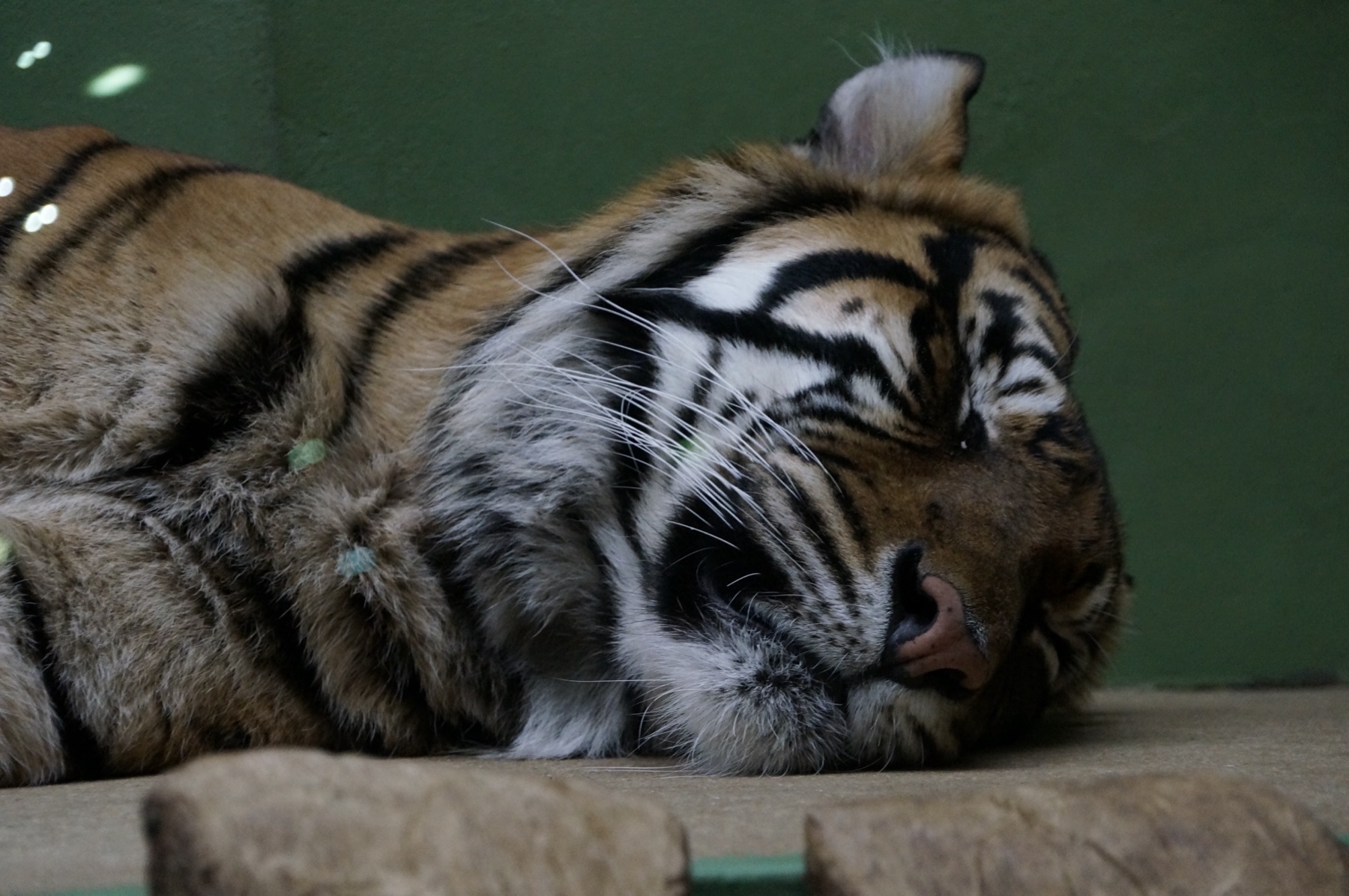
The photo from the zoo shows what happens with a slow zoom: at 123 mm, f/6.3 and 1/60 s it took ISO 3200, and the shutter time was still only 1/60 s.
Which lenses
For poorer light I would reach for fast primes. With Sony these have proved themselves:
- Sony FE 35 mm f/1.4 GM, 50 mm f/1.4 GM and 85 mm f/1.4 GM – top optics with fast autofocus, which you will appreciate in quiet venues and in video. Together with the Sony A7 IV they form a reliable pair. The difference between the 35 mm f/1.4 GM and f/1.8 is described in the comparison of the two 35 mm lenses.
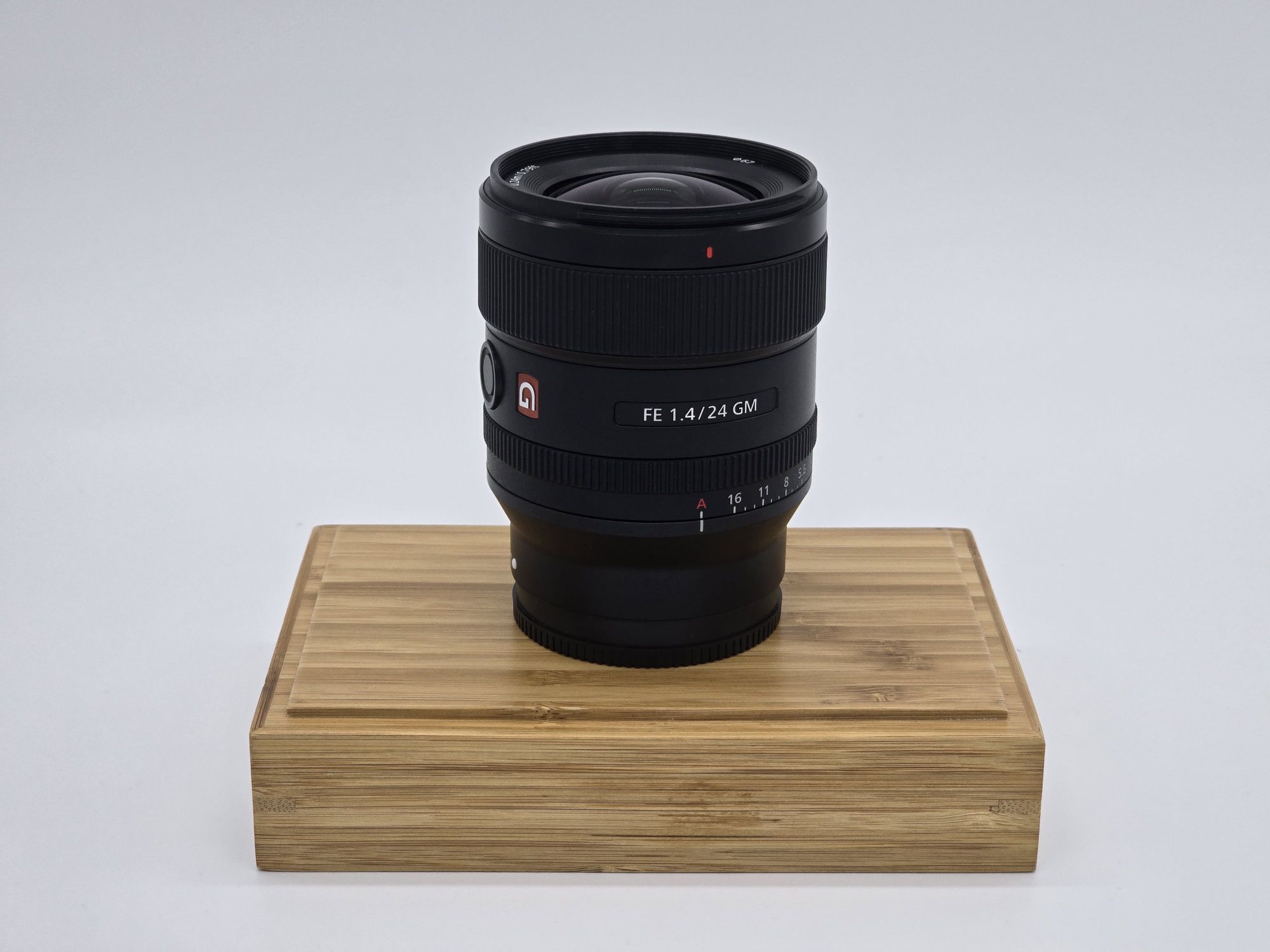
- Sony FE 24 mm f/1.4 GM – a fast wide-angle lens for interiors, the night city and stars. More about it in Sony FE 24 mm f/1.4 GM.
- Sony FE 35 mm f/1.8 – a cheaper and lighter way to fast glass.
In the Canon system similarly fast RF lenses work (for example the RF 35 mm f/1.8 Macro IS STM or RF 50 mm f/1.8 STM and RF 85 mm f/2 Macro IS STM), and on the R6 and R6 Mark II sensor stabilization helps as well. Choose the system according to the body you have or plan on.

Which body
For poorer light look for:
- sensor stabilization (IBIS), which allows longer shutter times by hand for static subjects, for example 1/15–1/30 s at 35 mm,
- good high-ISO performance, which means full frame rather than APS-C,
- autofocus that focuses in the dusk too,
- a silent shutter option for churches, concerts and theaters.
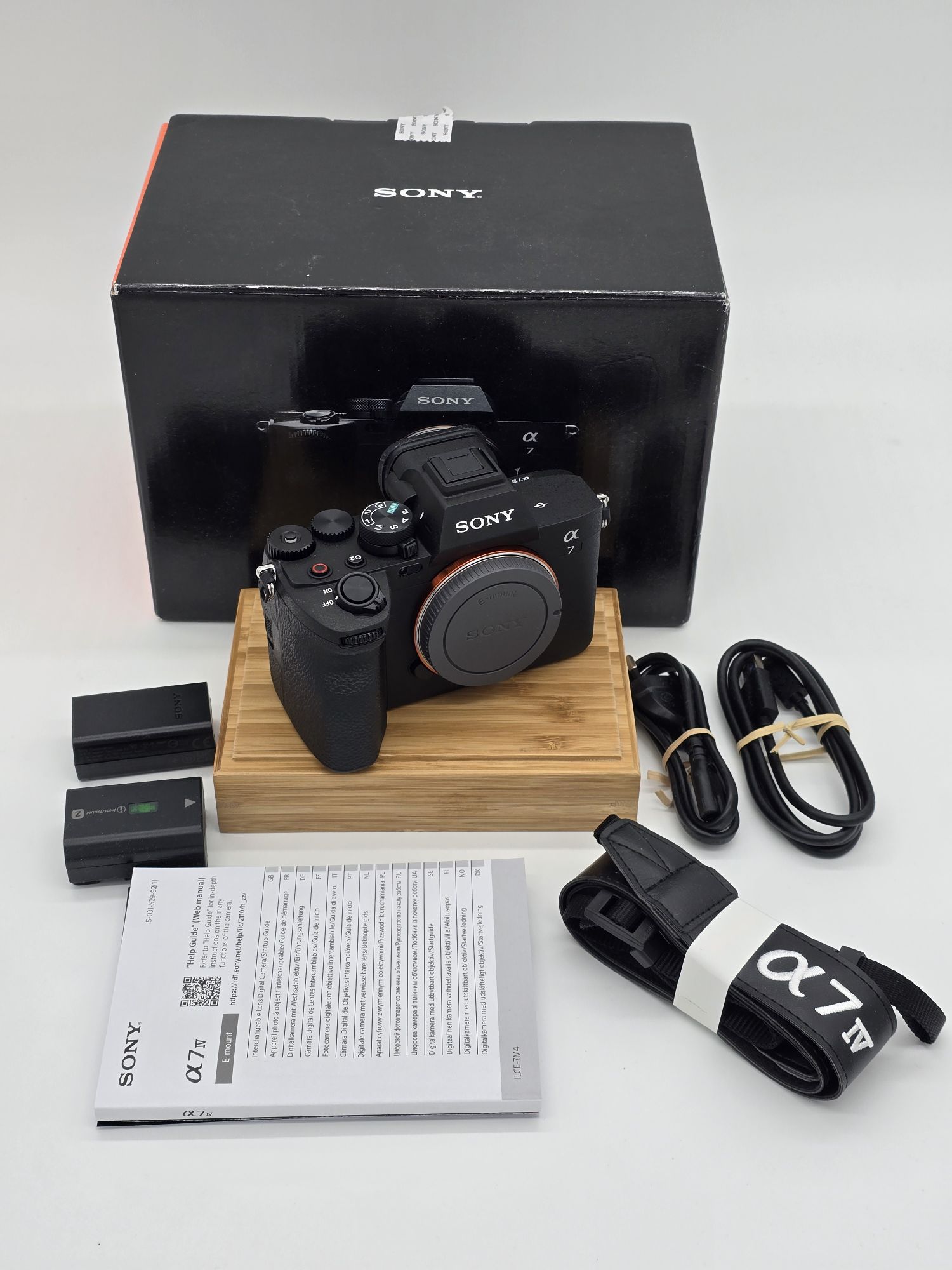
Of these, the Sony A7 IV, Canon EOS R6 and R6 Mark II and Nikon Z6 II fit. The Nikon is a solid alternative if its ergonomics suit you. A comparison of these bodies is in the article on the A7 III, R6 and Z6 II.
Settings in poor light
- Mode: manual with Auto ISO or aperture priority with Auto ISO. Set a minimum shutter time.
- Shutter time: for people standing still 1/125 s, for motion 1/250 s or faster. For static subjects (architecture, landscape) you can go to 1/15 s or lower with IBIS, but a person will blur at that point.
- Aperture: wide open, but at f/1.4 stop down half to one stop if you need more depth of field or sharper corners.
- ISO: 3200–6400 on full frame is fine. Set the upper limit of Auto ISO to 6400–12800.
- Autofocus: AF-S for static subjects, AF-C with tracking for people. In very weak light it helps to switch to the center of the frame or aim at a high-contrast edge.
- Metering: spot or highlight-weighted, because a scene with a bright lamp and darkness misleads the exposure. A compensation of −0.3 to −1 EV preserves highlights.
- Format: RAW, because white balance and noise are corrected better.
- Silent shutter: in a church or at a concert the body turns off the sound, but with LED lighting and fast motion there is a risk of banding and distortion, so try one shot and check.
Typical mistakes
- Relying on ISO. A higher ISO does not rescue a lack of light, it only hides it in noise.
- No margin in shutter time. 1/30 s at 50 mm by hand is technically possible, but people move anyway. Set the time by motion in the frame, not by focal length.
- f/1.4 for a portrait. It is easy to end up with a sharp nose tip and soft eyes. Stop down to f/2–f/2.8.
- Direct flash. Flat and unflattering. Bounce it off the ceiling, or rely on a fast lens.
- A forgotten tripod. For static scenes (night city, interior) a tripod is still the best way to keep ISO low.
What to check on a used unit
On an f/1.4 lens, check that at full aperture the image is equally sharp on both sides of the frame (lens decentering), that it focuses accurately and that the aperture moves smoothly. Look through it against the light for spots or fungus inside. On a body, test AF in the dusk, the state of stabilization (the image in the viewfinder must calm down when it is switched on) and whether the shutter makes strange sounds. You can find the shutter count using this guide; with older models and a higher count it pays to ask about the state of the shutter. The procedure is in How to check a used lens and How to check a used camera.
What I would do
Do not expect miracles from the body alone. With an f/1.4 lens and a low-noise body you have a much better chance in a dark setting than with an f/4 zoom. I would take a Sony A7 IV or Canon EOS R6 with a 35 mm or 50 mm f/1.4 and learn to keep the shutter time above 1/125 s with people. What I currently have on offer you can see in the cards, and the whole offer is on the website. Tell me where you shoot (concerts, apartment, weddings) and I will choose a combination.