
Buying advice
Kids at home and outdoors: fast and simple
For kids you need fast autofocus and a fast lens, not a menu full of settings. Which body and lens to choose, how to set them up and what to check on a used unit.
Children do not follow a script. On the playground they run, in the living room they turn away mid-sentence, and the expression you wanted lasts a fraction of a second. So with kids it is not how expensive your gear is that matters, but whether the body tracks a moving subject reliably and whether you have it within reach. This article sums up which body and lens combination I would recommend for children, how to set it up so you do not have to think about it, and what to look at when buying a used unit.
What photographing kids demands from your gear
Three things. First, autofocus with tracking: the body has to find the eye or face and hold it while the child moves toward you. Second, a short shutter time, because children are fast and blurred hands or feet spoil the picture. Third, light: apartments are dark and a fast lens saves you a lot of noise.
If the shutter time must be short and there is little light, a fast lens is what you need. An f/4 zoom in a living room ends up at ISO 6400 or higher, while f/1.8 or f/1.4 gives you two to three stops more. That is why I recommend prime lenses for kids indoors, while outdoors almost anything will do.
Which body
Any newer mirrorless body with eye detection and tracking is good. From what commonly turns up on the used market:
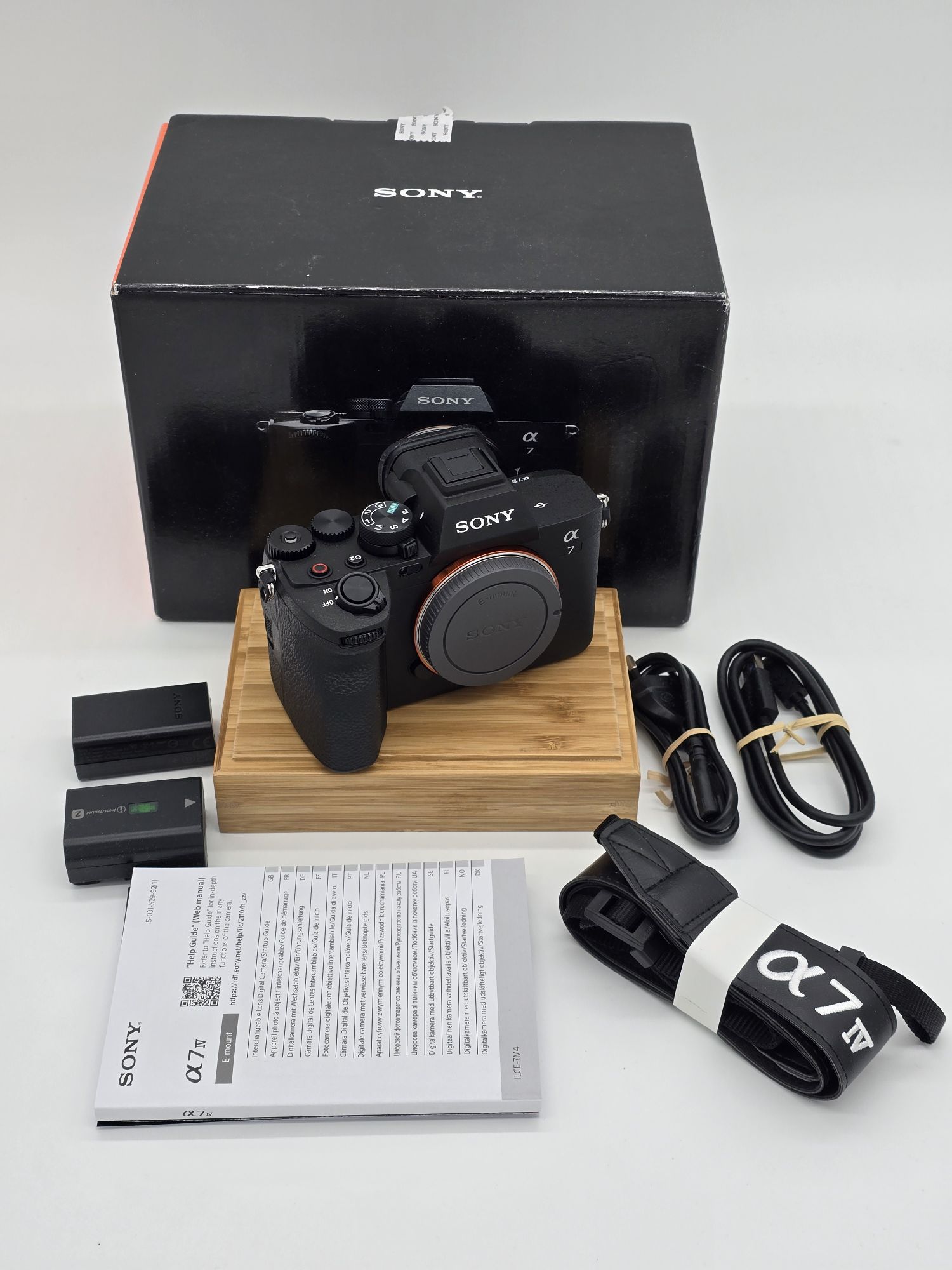
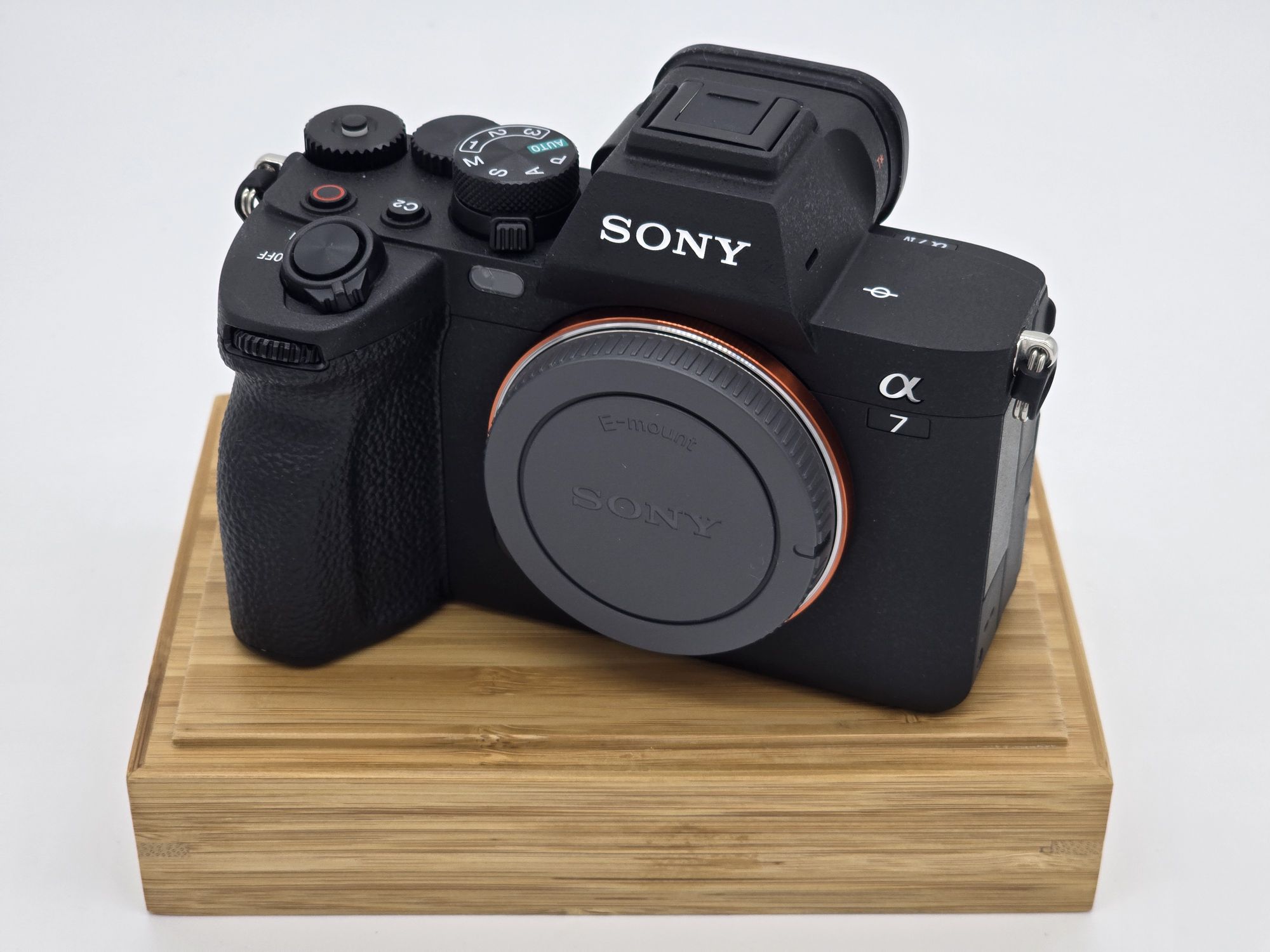
- Sony A7 IV – 33 MP, tracking of people, animals and birds, and in-body stabilization. A universal body that handles the family now and something more demanding later. If it is on offer, you will see it in the card below.
- Canon EOS R6 Mark II – 24 MP, a very fast and reliable AF and high burst rates, excellent for kids at sports and at play. It also has pre-capture in the electronic shutter (check the menu of the particular unit).
- Canon EOS R7 – APS-C, 32.5 MP, smaller and lighter. It suits you when you want reach (1.6× crop) and do not want to carry large glass.
- Nikon Z6 II or Nikon Z6 III – the ergonomics Nikon is known for. The Z6 III is newer with better tracking and pre-capture; the Z6 II is a solid and cheaper choice.
The differences between these bodies matter less with children than you would expect. Choose by what feels right in your hand and by the lens system you already have or want. A detailed comparison is in Canon EOS R6 Mark II vs Sony A7 IV.
Which lenses
For kids at home I would reach for a 35 mm or 50 mm with an aperture of f/1.4–f/1.8. 35 mm is just wide enough to fit the child and the surroundings without backing into a wall. 50 mm gives a more natural perspective and better separation from the background.
- Sony FE 35 mm f/1.4 GM – fast, quiet and quick autofocus, compact. One of the best combinations for kids at home.
- Sony FE 35 mm f/1.8 – a cheaper and lighter variant if you do not need f/1.4.
- Sony FE 50 mm f/1.4 GM – a classic for portraits and everyday family photos.
- Sony FE 85 mm f/1.4 GM – for portraits, not for an apartment. You need distance and time to compose.
For the playground and the garden a zoom such as a standard 24–70 mm f/2.8 fits, because the child moves away and comes closer and you cannot keep changing lenses. For a closer look see Sony FE 35 mm f/1.8 vs f/1.4 GM.

Settings that work
I do not want you scrolling through menus while photographing children. This is a baseline to start from:
- Mode: aperture priority (A) with Auto ISO, or manual with Auto ISO. Set the minimum shutter time to 1/250 s for calm kids and 1/500–1/1000 s when they run.
- Autofocus: continuous (AF-C) with tracking and eye or face detection. Keep the area wide so the body locks on by itself.
- Aperture: f/2–f/2.8 indoors, not wide open at f/1.4. At close portrait distance the depth of field is a few centimeters, and you end up with one eye sharp and the other not.
- ISO: on a modern full-frame body, 3200–6400 is fine. Noise cleans up better than blur.
- Shutter: mechanical for fast kids. Electronic is silent, but with fast motion and artificial light (LED, fluorescent) it can cause distortion and banding.
- Format: RAW + JPEG when you want room to adjust exposure and white balance.
Typical mistakes
- Shutter time too long. With good stabilization 1/60 s is reasonable for a still subject; for a moving child it guarantees blur.
- Wide open with motion. f/1.4 looks tempting, but you will miss focus. The child moves forward and back.
- Focus lock on the wrong thing. The body grabs an object in the foreground. A zone or eye tracking helps.
- Shooting from above. Lie down on the floor. Photographing at the child's eye level turns a snapshot into a story.
- Flash straight into the face. Bounce it off the ceiling or a wall instead, or skip the flash and use a fast lens.
What to check when buying a used unit
For the body, the shutter count is not the point; the overall condition is. Test all buttons and dials, check the display and that the battery holds a charge, and try AF tracking on a moving subject (for example on a friend walking toward you). With a lens, look through it against the light: dust inside is common and mostly harmless, but fungus or scratches on the glass are not. Test the aperture and the smoothness of the focus ring. The detailed procedure is in How to check a used camera before buying and How to check a used lens.
What I would do
For kids I would take one newer body with eye tracking and a fast 35 mm or 50 mm lens. Indoors f/2, a shutter time of 1/250 s or faster, Auto ISO and AF-C. Add a zoom for trips. You need nothing more, and nothing more will improve your photos; time and patience matter more than gear. What I currently have on offer you can see in the cards above, and you can browse the whole offer. Tell me the age of your children and where you shoot most, and I will suggest a kit.